On March 17, 2026, Maya Center stopped offering remittance. That was the service its agent network was built on. Its price had barely moved since 2004. Everything around it had.
| Cheaper digital rails priced Smart Padala out, and Maya is turning the old padala counter into a cash-and-credit outlet for its bank. 1. The price stood still while rivals fell toward zero. Sending ₱5,000 cost about ₱150 at Smart Padala’s 2004 launch and ₱150 under its 2023 rate card, while Maya-to-Maya transfers cost nothing. 2. The money is now in lending, not fees. Maya earned ₱1.7 billion in 2025, and its agent page now leads with loans of up to ₱350,000 instead of padala. 3. The people left behind are the ones the network was built for. Only half of Filipino adults had a formal account in the BSP’s 2025 survey, so many receivers still depend on cash. To see what changed on the ground, start with one mother in Samar and the store she visits twice a month. |
Celia is 61. She lives in a barangay outside Catarman, Northern Samar. Her son Jomar works on a construction crew in Pasig. Every 15th and 30th, he sends her ₱5,000.
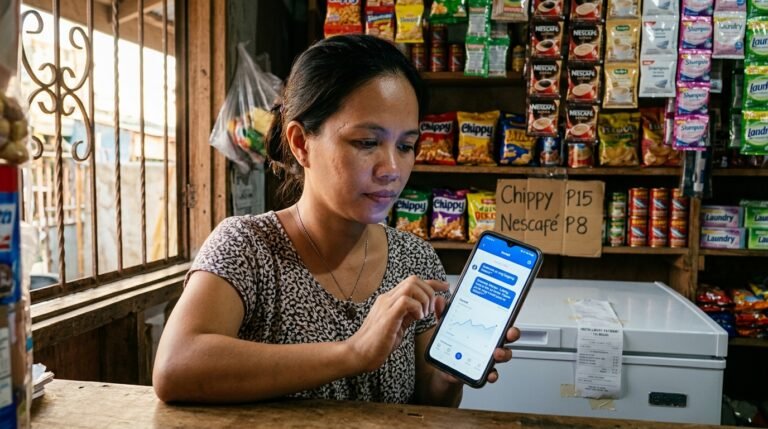
For years the routine never changed. Jomar walked to a Smart Padala counter near his boarding house. He paid ₱5,150 and texted his mother the claim details. Celia walked five minutes to Aling Rosa’s sari-sari store. It had a padala sign out front. She gave the reference and authorization code and left with cash. No bank account. No app. No queue at a pawnshop. The fee was about 3%. Nobody in the family gave it much thought.
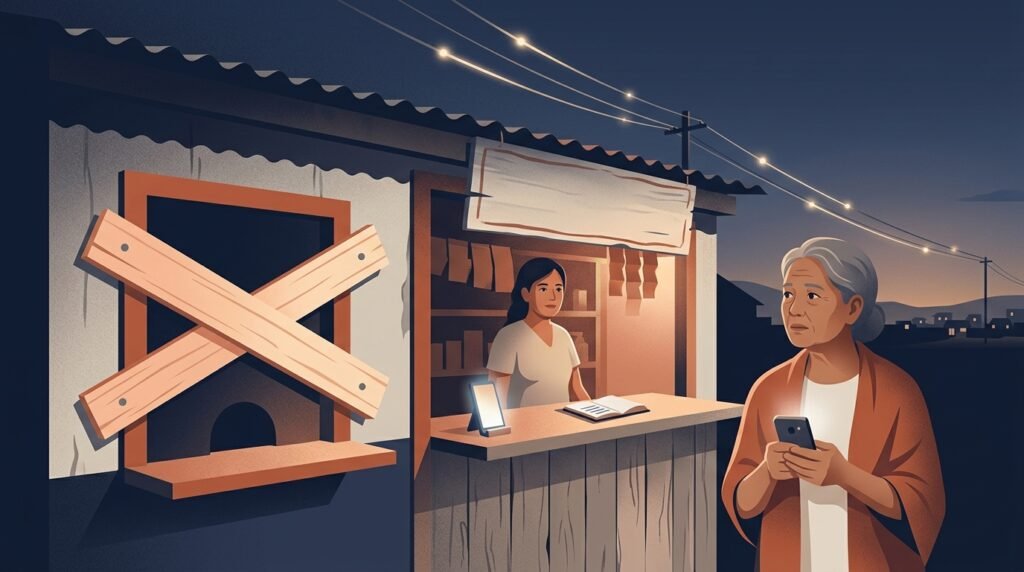
In March 2026, Rosa gave her the news. From March 17, the store could no longer release padala. The sign had said Maya Center since 2022. Rosa could still sell load and take bill payments. She could still cash people in and out of Maya accounts. She could not hand Celia money that someone else had sent.
So the family needed a new route. Jomar could switch to GCash Padala. It advertises fees as low as 1% and more than 110,000 partner outlets. But Celia would need a valid ID. She would also likely ride into town to reach an outlet. The other option was a Maya account for Celia. Then Jomar’s transfers would be free, and Rosa could cash her out at the same counter. That route is cheaper and closer. It also asks a 61-year-old with a basic phone to become a digital banking customer.
Cheaper for the connected. Harder for the unconnected. That is the whole story.
The padala was the product. Then it wasn’t.
Smart Padala started on August 1, 2004. It was a text-based remittance service from Smart Communications. Its first users were overseas Filipinos sending money home. Its pitch was price. A door-to-door padala of ₱5,000 then cost about ₱300. Smart’s version cost about ₱150 in total. Roughly ₱100 went to the remittance partner. About 1%, or ₱50, went to the outlet that paid out the cash.
The service then moved into neighborhood stores. In July 2016 it counted 15,000 centers. By March 2020 it had more than 27,000 agents. In June 2021, Voyager Innovations reported more than 40,000. By November 2021, the brand claimed over 60,000 agents. It said they covered 92% of cities and municipalities. It also said an agent was only about six minutes away.
Then the name changed. PayMaya became Maya in 2022, and Smart Padala centers became Maya Center. Maya told agents the rebrand changed nothing else. Rates, fees and commissions stayed the same. Smart Padala stayed on the menu. Today the old smartpadala.ph address forwards to the Maya Center page.
That page now carries a short notice. In Maya’s words: “Starting March 17, 2026, Maya Center will no longer offer remittance services. All other services remain available.”
Maya has given no public reason. The earnings coverage we reviewed for 2025 and 2026 does not mention Maya Center. That silence is why this case is worth a close look. The service that gave the network its name is gone. The company has not said what the network is for now. The answer has to come from the pressures around it.
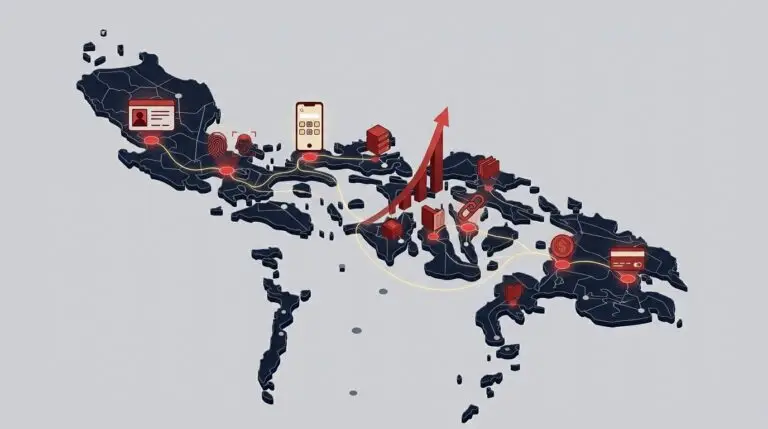
Innovation Pressure Map: why Maya let the padala go
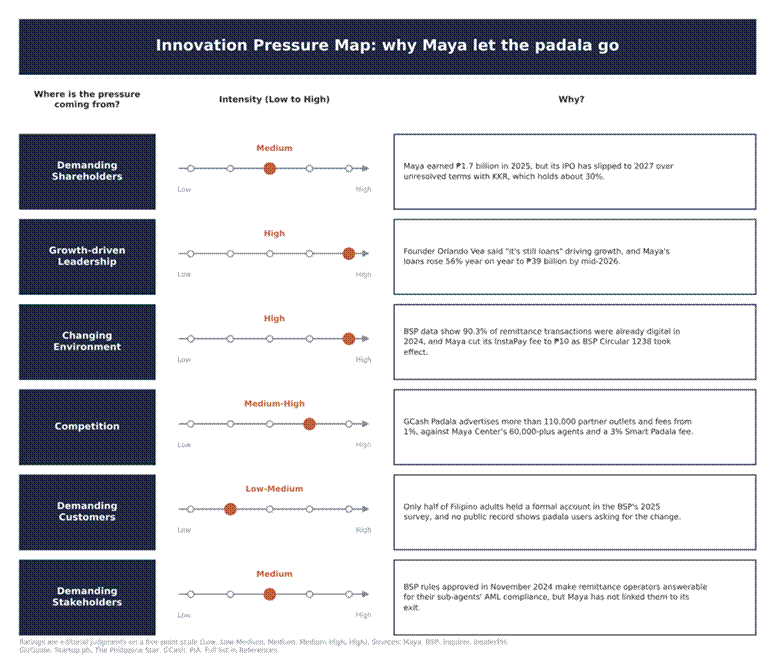
Figure 1. Innovation Pressure Map for Maya Center’s exit from remittance
Each marker sits on one of five discrete positions; the scale is an editorial judgment, not a measurement. Sources: Maya; BSP 2024 Status of Digital Payments; BSP consolidated MSB rules (Nov 2024); InsiderPH (Jan 30, 2026); GizGuide (Aug 16, 2026); Inquirer (Feb 26 and Jul 5, 2026); Startup.ph (Aug 2026); The Philippine Star (Jul 4, 2026); GCash; PIA (Apr 16, 2026).
The two High rows are Leadership and Environment. One shows where Maya wants growth to come from. The other shows that digital transfers had already gutted the padala’s economics. The Customers row sits near the bottom. Yet that is the row the old brand was built around.
These ratings are uncertain. Stakeholders would rise to High if Maya or the BSP showed that agent payouts had become a fraud or AML problem. Shareholders would rise if the IPO date firms up. A fast-growing loan book is an easier story to sell than a flat fee line. Customers would fall to Low if padala turned out to be a tiny share of agent transactions. None of those numbers are public. The map reflects the record as it stands.
Four ways to read March 17
Each reading of the decision predicts a different row at the top of the map.
Reading one: digital transfers beat the padala. This predicts Environment and Competition should be highest. The evidence is strong. The BSP’s 2024 digital payments report breaks out person-to-person transfers. About 90% of them were digital by volume. For the remittance sub-category, the figure was 90.3%. By value it was 81.6%. InstaPay alone moved ₱11.55 trillion in 2025. That was up 57% from ₱7.35 trillion in 2024. When nine in ten transfers already run digitally, a cash counter serves the last tenth of the market.
Reading two: payouts became a compliance risk. This predicts Stakeholders should be highest. The logic holds up. A Smart Padala claim needed transaction details and an authorization code. Maya kept a strict no-reversal policy once the money was paid out. AFASA became law in July 2024. It lets institutions hold disputed funds for up to 30 days. It also punishes money muling with six to eight years in prison or fines of ₱100,000 to ₱500,000. But a hold only works on money still in an account. Cash handed across a counter is gone. The BSP’s November 2024 rules also made remittance operators responsible for their sub-agents’ AML compliance. Still, Maya has never cited fraud or compliance. No public case ties Smart Padala payouts to scam losses. This reading is possible. It is not proven.
Reading three: Maya is pointing the network at credit. This predicts Leadership and Shareholders should top the map. The evidence fits. Maya’s agent page now leads with two loans, not padala. Maya Flexi Loan offers up to ₱2 million. Maya Advance offers up to ₱350,000, payable within 90 days. The featured agent is a 13-year veteran in Mabalacat, Pampanga. The page says Maya Advance helped her open a coffee shop. The idea is not new. In 2021, Voyager already called its agents small entrepreneurs who need small loans to keep their shops running. In January 2026, Vea said loans were still driving Maya’s growth.
Reading four: Maya handed remittance to a partner. In August 2025, Maya and Cebuana Lhuillier announced an alliance. Coverage said Maya Center agents would get to handle international remittances. They would also tap Cebuana’s network. Seven months later, Maya Center dropped remittance entirely. The advisory does not send customers to Cebuana or anyone else. It simply says the service ends. The record does not show a handoff. If anything, the shutdown cut across the plan announced in 2025.
Two readings survive. The padala’s economics collapsed. And Maya’s leadership wants the network working for its bank. Compliance may have added weight, but the evidence cannot say how much. Customer demand has the least support of all.
A ₱150 price that never moved
The clearest evidence is the rate card. Maya’s Smart Padala terms took effect on April 1, 2023. They charged ₱30 for amounts up to ₱1,000. Each extra ₱500 added ₱15. That works out to a flat 3% at round amounts: ₱30 on ₱1,000, ₱150 on ₱5,000, ₱300 on ₱10,000.
Now go back to 2004. Sending ₱5,000 through Smart Padala then cost about ₱150. Under the 2023 card, it still cost ₱150. In 2004 that price was half the market rate. By 2026 it was the expensive option.
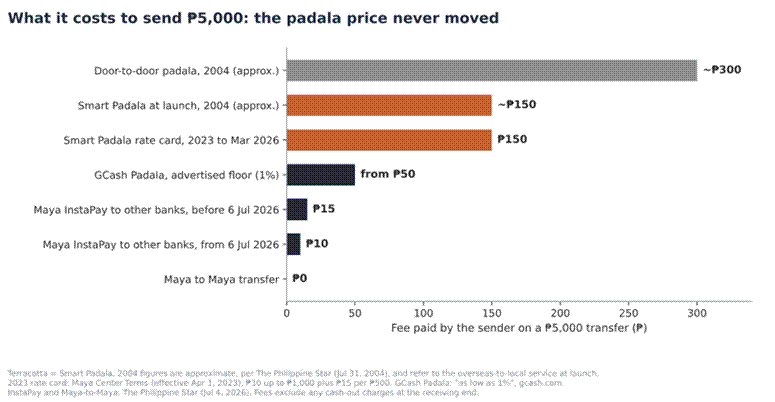
Figure 2. What it costs to send ₱5,000, 2004 to 2026
Sender fees only. 2004 values are approximate and describe the overseas-to-local service at launch. Sources: The Philippine Star (Jul 31, 2004); Maya Center Terms and Conditions (effective Apr 1, 2023); GCash Padala page (accessed Oct 4, 2026); The Philippine Star (Jul 4, 2026).
Get the next SEA banking case study in your inbox
Free. Unsubscribe anytime.
The chart shows the squeeze. Transfers between Maya users are free. Maya’s InstaPay transfer to another bank cost ₱15 until July 6, 2026. It then fell to ₱10. The cut lined up with BSP Circular 1238, which took effect on July 4. The circular asks for transfer fees that are fair and tied to cost. GCash made the same cut. BPI dropped its InstaPay and PESONet fees altogether. GCash Padala, the closest cash product, advertises fees from 1%. On ₱5,000, that floor is ₱50. Against all of these, a 3% padala only made sense for someone with no account at either end.
The network numbers point the same way. Smart Padala grew fast until 2021. It went from 15,000 centers in 2016 to more than 60,000 agents by late 2021. Then the curve flattens. Maya’s cash-in page still says “more than 60,000 agents nationwide.” GCash moved the other way. In January 2022, it advertised over 40,000 GCash Padala partner outlets. Today it advertises over 110,000. GCash grew through partners such as pawnshops, remittance chains and retail outlets. Maya built and ran its own agents. That kept control in-house. It also made scale harder.
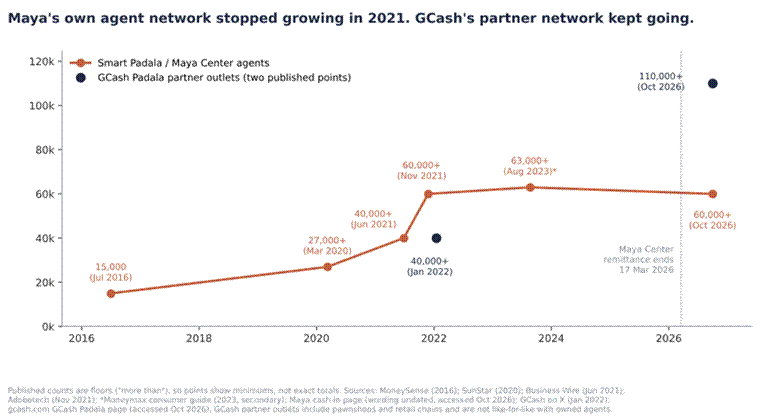
Figure 3. Smart Padala and Maya Center agents against GCash Padala partner outlets, 2016 to 2026
Published counts are floors (“more than”). The 2023 point comes from a consumer guide, not Maya. GCash outlets are partner locations, not owned agents. Sources: MoneySense (2016); SunStar (2020); Business Wire (2021); Adobotech (2021); Moneymax (2023); Maya cash-in page; GCash on X (Jan 2022); GCash Padala page (accessed Oct 4, 2026).
The pawnshop chains are growing too. Palawan Express Pera Padala reports more than 10,000 branches. Its PalawanPay app claims over 20 million users. Cebuana Lhuillier counts over 3,500 branches. It adds about 25,000 partner locations. These chains are built to pay out cash safely. They have tellers, ID checks and vaults. A sari-sari store paying padala from its till does the same job with fewer safeguards.
What the counter is for now
Put the threads together and the picture is clear. The padala earned thin margins. Its price was stuck at a 2004 level. It was losing volume to free and near-free digital rails. And AFASA had raised the stakes of every cash payout. Meanwhile, Maya’s bank was turning a profit on lending.
The lending numbers are large. Maya posted ₱1.7 billion in net income in 2025. It was the group’s first full year of profit. Deposits reached ₱68 billion at end-2025. By mid-2026 they were ₱86 billion. Loans reached ₱39 billion. Maya says it has disbursed ₱256 billion in loans since 2022. Its net interest margin was 18.9% as of September 2025, up from 13.9% in 2024. Maya reported about 10.7 million bank customers at end-2025.
A network of 60,000 store owners can do two things for a digital bank. It can move cash into and out of accounts for people paid in cash. And it can supply small-business borrowers whose daily transactions help with credit decisions. Both roles serve the Leadership row. The padala served neither. It moved money between two people who might never open a Maya account.
The cash role still matters. In the BSP’s 2025 Consumer Finance and Inclusion Survey, only 50% of adults owned a formal account. That was down from 56% in 2021. A later SWS survey for the BSP looked at adults 18 and over. It found 58% ownership in the first quarter of 2026. Just 43% had an e-money account, and 21% had a bank account. Either way, much of the country still lives in cash. We saw the same gap from the merchant side in Xendit Just Bought the Slowest Payment Method in the Philippines. There, over-the-counter cash payments survived because about half of adults lack a formal account.
Here the design and the pressures part ways. Dropping padala answers the Environment row. Maya stopped selling a product the market had repriced. Pushing agents toward loans answers the Leadership row. But the counter service that remains has its own friction. Maya’s cash-in page lists a 2% convenience fee at Maya Center. The fee is refunded only if a user’s cash-ins stay at or below ₱10,000 for the month. For someone like Celia, the free reason to walk in is gone. The replacement asks her to open a Maya account first.
That is where the model is fragile. Padala traffic paid agents whether or not anyone owned an app. That traffic is gone. What remains depends on Maya users needing cash in or out. It also depends on loans that agents must repay. Maya’s gross non-performing loan ratio was 6.1% in its 2025 results. Lending to stores that just lost a fee stream adds risk on both sides of the counter. If agents drift to rival networks, Maya loses its presence in the barangays its app reaches least.
What a skeptic should still doubt
Maya has not said why. Every reading above is inferred from prices, products and timing. Maya’s public materials say only that remittance ends and other services continue. One disclosure on padala volume, fraud cases or agent income would settle more than this analysis can.
The agent count may be stale. Maya’s cash-in page says “more than 60,000 agents.” The same figure appeared in November 2021. A consumer guide cited more than 63,000 in 2023. There is no public count for 2025 or 2026. The network could be larger now. It could also be smaller and still described with an old number.
The 2004 comparison is not exact. The launch price of about ₱150 combined a partner fee and an outlet fee. It covered money sent from abroad. The 2023 figure is a domestic rate card. Both measure the cost of putting ₱5,000 in someone’s hand as cash. That is why they share a chart. Line by line, they are different products.
The digital share is a national figure. The BSP’s 90% share covers the whole market. It says nothing about Smart Padala’s own customers. Those were the cash users by definition. The service may have kept a loyal base until the end.
The fee cut came after the shutdown. Circular 1238 and the ₱10 InstaPay fee arrived in July 2026. That was months after March 17. They show where pricing was heading. They did not cause the decision.
Three answers for three readers
For the customer (the Customers row). If you send money home, the change will probably save you money. Help your receiver open an account, and Maya-to-Maya transfers cost nothing. A Maya Center agent can still cash them out. If your receiver cannot open an account, you still have options. GCash Padala needs a valid ID at the claim point. Pawnshop chains such as Palawan Express and Cebuana Lhuillier also pay out cash. Compare the full fee before you switch. Check how far your receiver must travel, too. Distance was the cost Smart Padala never put on its rate card.
For Maya’s strategy (the Leadership row). Ending padala was defensible. It removed a low-margin product priced at a 2004 level. It freed the network for the business that pays: deposits and loans. It fits the pattern in Inside the Playbook Behind Southeast Asia’s Profitable Fintechs. The durable players there earn on lending, not on moving money. The risk sits in the funnel. Padala brought non-Maya users through the door. Maya should track where those receivers went. Did they open Maya accounts, or walk to a GCash outlet? If the second group is bigger, the shutdown handed a rival its traffic.
For regulators and analysts (the Stakeholders and Environment rows). The BSP tracks financial access points. A network of 60,000 stores that stops paying out remittances is a real loss of cash-to-cash access. It is easy to miss, because the signs stay up. Analysts weighing a 2027 Maya listing should ask three questions. How many agents are active? How much of Maya’s lending goes to agents? How did agent income change after March 17? A distribution network is only an asset if the people running it still earn enough to stay.
Workshop: is your network built for the job it does today?
Maya’s choice is common. A company builds a network for one job. It keeps the network and quietly changes the job. That can be smart. It turns fragile when nobody asks if the people in the network still have a reason to show up. The same goes for customers who came for the old job.
Run your own product, channel or initiative through these questions.
| # | Question | Your answer |
| 1 | What job did customers first hire your product or network to do? Does that job still pay, or has your revenue moved elsewhere? | |
| 2 | If you stopped the original service tomorrow, who would lose their reason to come in? What would replace that traffic for your partners? | |
| 3 | Has your price changed since launch while rivals’ prices fell? If a rival is now near zero, what are customers still paying you for? |
Then fill in your own pressure map. Rate each row on the evidence. If every row reads High, you have not found the real problem yet.
| Where is the pressure coming from? | Intensity (Low to High) | Why? |
| Demanding Shareholders | ||
| Growth-driven Leadership | ||
| Changing Environment | ||
| Competition | ||
| Demanding Customers | ||
| Demanding Stakeholders |
Tags: Maya Center, Smart Padala, Maya, Maya Bank, Domestic Remittance, Agent Banking, Philippines Fintech, Fintech, Banking, AI & Data in Financial Services
IdeyaHub newsletter
Enjoyed this case study?
Get the next deep dive on Southeast Asian banks, fintechs and insurers in your inbox. One email a week.
Free. Unsubscribe anytime.
References
- Maya Center: Your barangay banking partner, Maya, advisory on remittance services ending March 17, 2026, accessed October 4, 2026
- Maya Center Agent homepage, Maya, accessed October 4, 2026
- Maya Center Agent: Smart Padala services, Maya, accessed October 4, 2026
- Maya Center Agent: Change Management Communication, Maya, 2022
- Cash In via Maya Center, Maya, accessed October 4, 2026
- Maya Center Terms and Conditions, Maya, effective April 1, 2023
- Maya Business Flexi Loan, Maya, accessed October 4, 2026
- Smart offers text-based remittance service, The Philippine Star, July 31, 2004
- Smart Padala strengthens leadership in remittance, launches new campaign with Angel Locsin as brand ambassador, MoneySense, July 1, 2016
- Smart Padala centers now digitized, SunStar Baguio, March 9, 2020
- Philippines’ Voyager Innovations Secures US$167 M for PayMaya Expansion Into Financial Services, Digital Banking, Business Wire, June 27, 2021
- Smart Padala by PayMaya Makes Remittances Easier with New Service, Gadget Pilipinas, June 23, 2021
- Smart Padala by PayMaya new SENDali Padala Experience, Adobotech, November 26, 2021
- Smart Padala Rate Table, Tech Pilipinas, updated December 13, 2025
- Maya Center: A Comprehensive Manual for First-Time Users and Agents, Moneymax, updated August 22, 2023
- GCash Padala, GCash, accessed October 4, 2026
- GCash Padala post on partner outlets, GCash on X, January 2022
- Maya to cut InstaPay transfer fee to P10, The Philippine Star, July 4, 2026
- GCash, Maya reduce InstaPay transfer fees, Inquirer Business, July 5, 2026
- 2024 Status of Digital Payments in the Philippines, Bangko Sentral ng Pilipinas, 2025
- Over half of retail transactions now digital, says BSP, The Philippine Star, July 8, 2025
- InstaPay, PESONet transfers reach P24.7 trillion in 2025, BusinessWorld, January 23, 2026
- Consolidated Rules for Money Service Businesses under the MORNBFI, Bangko Sentral ng Pilipinas, approved November 28, 2024
- The Anti-Financial Account Scamming Act, Fortun Narvasa and Salazar, on Republic Act No. 12010, approved July 20, 2024
- Cebuana Lhuillier and Maya forge alliance to broaden access to credit and remittance services, Inquirer Business, August 18, 2025
- Maya Bank, Cebuana Lhuillier team up to boost MSME financing, BusinessWorld, August 20, 2025
- Maya, Cebuana Lhuillier partnership boosts credit to micro stores, sellers, Malaya Business Insight, September 16, 2025
- ‘Bright spot’ for PLDT group: Maya nets P1.7B in 2025, Inquirer Business, February 26, 2026
- Maya posts ₱1.7-B profit in 2025, marking first full year in the black, Newsbytes.PH, March 1, 2026
- Maya’s big plans: Home and car loans to power growth, IPO possible, InsiderPH, January 30, 2026
- Winning: Maya scales profitably as digital bank growth accelerates, InsiderPH, April 17, 2026
- PLDT shares financial and operating results for H1 2026, GizGuide, August 16, 2026
- Maya IPO Targeted for 2027, Behind GCash’s Own Listing Plans, Fintech News Philippines, August 11, 2026
- Maya’s IPO Was Supposed to Happen This Year. Now Its Own Chairman Says the Holdup Is ‘Not Us, It’s Them.’, Startup.ph, August 2026
- BSP survey shows gains in youth and women’s financial access, formal lending, financial literacy, Philippine Information Agency, April 16, 2026
- E-wallet boom boosts financial inclusion in first quarter, The Philippine Star, May 24, 2026
- A legacy of excellence: Palawan Group of Companies marks 40 years with historic 2025 results, The Philippine Star, February 16, 2026