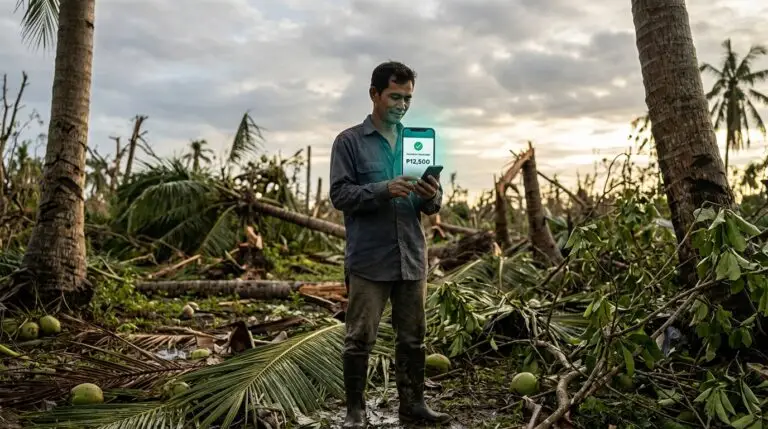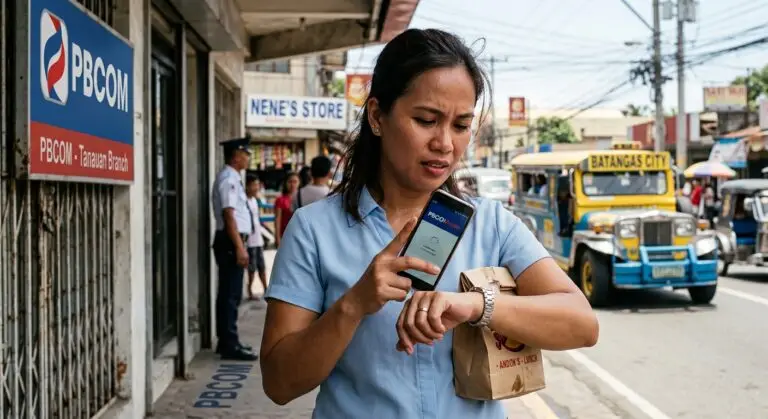
Shopee’s purchase history lets MariBank lend to Filipinos with no credit file before they even ask. Sea’s newest loans are going to places that history barely covers.
| MariBank’s Shopee-data underwriting works best on customers Sea already knows, but the pressure behind it is growth, and growth is pulling credit toward people and purchases Shopee’s data barely covers. 1. The data edge is real inside Shopee. Sea says models trained on each user’s full behavior history lifted approvals about 10% at similar risk, while Monee’s 90-day NPL ratio held at 1.0% on a US$11.1 billion book. 2. Growth is moving past that edge. Off-Shopee SPayLater now tops 20% of the portfolio, Monee’s marketing spend rose 139.8%, and group credit-loss provisions grew 71.5%, faster than 62.5% loan growth. 3. The Philippine legal wrapper is still being rebuilt. MariBank became a licensed digital bank only on July 18, 2026, while Shopee’s main Philippine credit lines are still issued by a separate SEC-registered financing company. To see why that matters, start with one baker in Cagayan de Oro. |
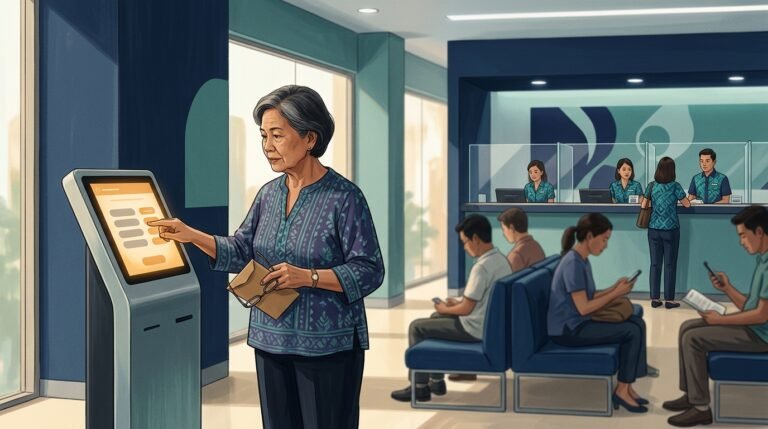
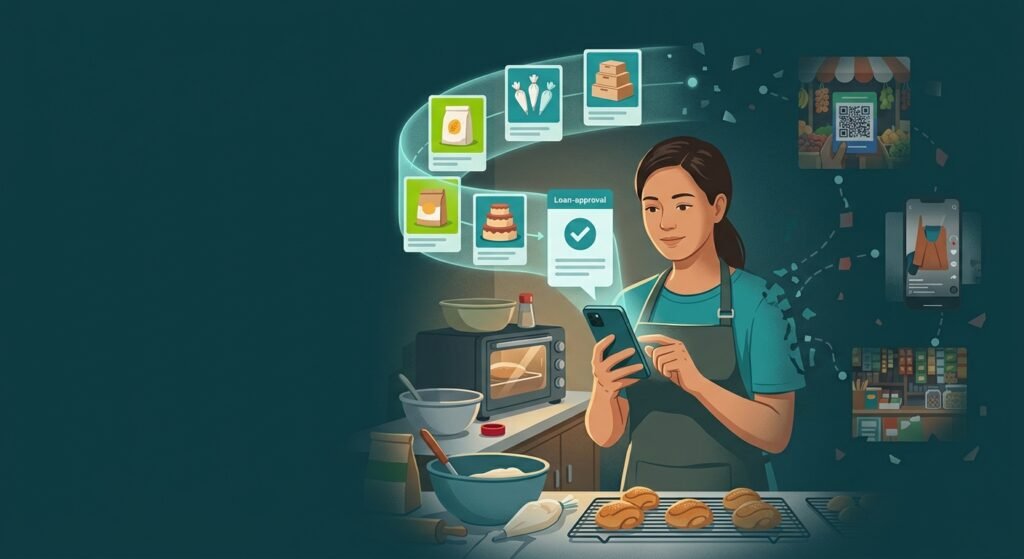
Mae is a composite borrower, but every number in her story comes from MariBank’s own product disclosures. She runs a home-baking business in Cagayan de Oro. For three years she has ordered flour, piping bags and cake boxes on Shopee, and she has never missed a payment. She has no credit card and no bank loan. If a lender pulled her file from the Credit Information Corporation, it would find almost nothing.
When her oven died in 2023, the formal system had no use for her. A bank wanted proof she could not produce. So she borrowed from a cousin and lost two weeks of orders.
This year the oven died again. This time Mae opened the MariBank app. A Mari Loan offer was already waiting on the home screen, with a credit limit set before she asked. She only had to activate it. There was no form and no payslip upload. She drew PHP 20,000 and picked a six-month term. At a 1.95% monthly add-on rate, the interest comes to PHP 2,340. She repays about PHP 3,723 a month, deducted automatically from her MariBank savings. A documentary stamp tax of roughly PHP 75 came off the top. The cash landed in an account that earns 3.25% a year. Her new oven arrived in days, because Shopee’s fulfillment network has cut Mindanao delivery times by one to three days.
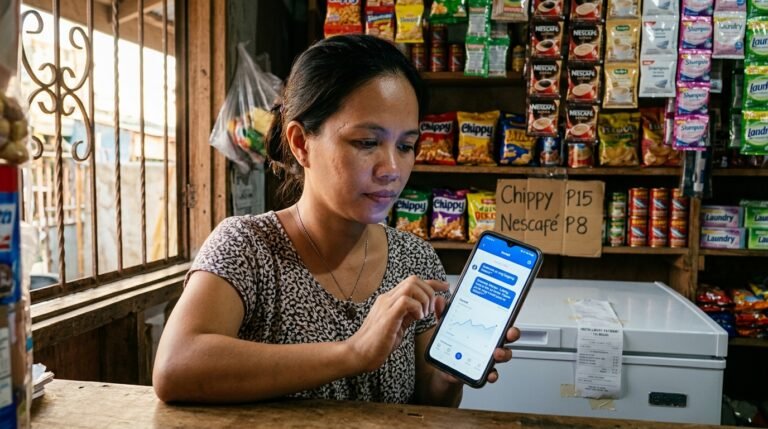
A week later Mae scanned a QR Ph code at her flour supplier’s stall and paid with SPayLater. For her, it was one more tap. For MariBank, it was something new: a credit decision about a purchase that never touched Shopee.
That second tap is the real story.
The problem the press release doesn’t name
The public explanation is simple. The Philippines has thin credit files, so Sea uses Shopee data to fill the gap. In a Fortune interview in August, MariBank’s Goh explained the logic. Many Filipinos have never had a loan or a card, so bureau records are thin, and the bank fills the gap with what Shopee knows about them. The gap is real. The Credit Information Corporation held records on 40.8 million borrowers as of end-July 2026. At an industry summit hosted by credit bureau CIBI, a speaker estimated that only about 1% of Filipino loan applications get approved because lenders lack the data to judge them.
But a thin-file problem would show up as customer pressure. It doesn’t. When you rate the forces acting on MariBank honestly, the strongest one comes from inside Sea.
Innovation Pressure Map: what is really pushing MariBank to lend
| Where is the pressure coming from? | Intensity (Low to High) | Why? |
| Demanding Shareholders | Low ○○●○○ High Medium | Sea’s credit-loss provisions jumped 71.5% to US$555.2 million in Q2 2026, and analysts on the call asked for NPL and provisioning guardrails even as Sea bought back US$416.8 million of stock. [1, 2] |
| Growth-driven Leadership | Low ○○○○● High High | Sea’s CEO said only a fraction of ecosystem users borrow from Monee, and Monee added about 5.3 million first-time borrowers in one quarter while its marketing spend rose 139.8%. [1, 2] |
| Changing Environment | Low ○○○●○ High Medium-High | The BSP converted MariBank from a rural bank into the country’s seventh licensed digital bank, live from July 18, 2026, while QR Ph now carries SPayLater payments outside Shopee. [2, 5, 6] |
| Competition | Low ○○○●○ High Medium-High | GCash’s lending arm has lent PHP 451 billion to 11.5 million borrowers through June 2026, and TikTok Shop took 29% of Philippine top-platform e-commerce GMV in 2025. [12, 15] |
| Demanding Customers | Low ○○●○○ High Medium | The CIC held files on 40.8 million borrowers as of end-July 2026, leaving many shoppers without a credit record, yet Mari Loan stays open only to pre-qualified MariBank users. [10, 8] |
| Demanding Stakeholders | Low ○●○○○ High Low-Medium | BSP Deputy Governor Mamerto Tangonan publicly praised MariBank as an early backer of the BSP’s free-transfer push when its digital license was issued in July 2026. [5] |
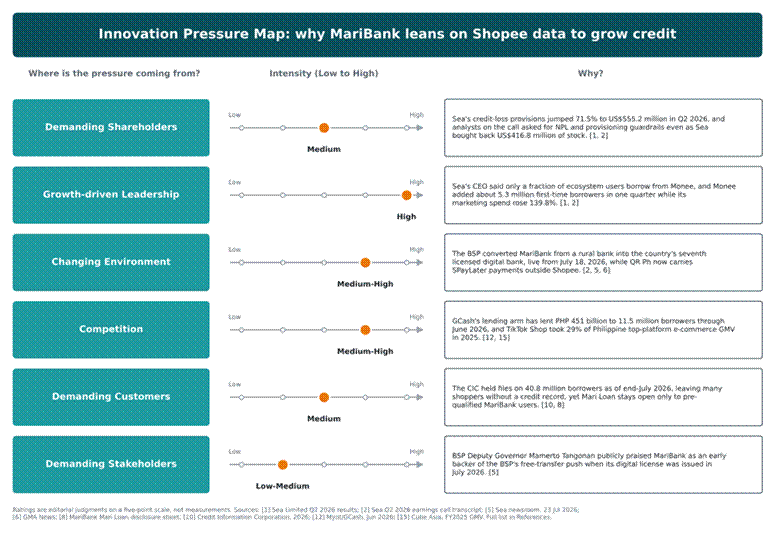
Figure 1. Innovation Pressure Map for MariBank’s Shopee-data credit. Each marker sits on one of five discrete positions; ratings are editorial judgments. Sources: Sea Limited Q2 2026 results [1]; Sea Q2 2026 earnings call [2]; Sea newsroom [5]; GMA News [6]; MariBank Mari Loan disclosure [8]; Credit Information Corporation [10]; Mynt/GCash [12]; Cube Asia [15].
Growth-driven leadership is the only High. Forrest Li told investors in August that only a small share of Sea’s users borrow from Monee, and that borrowing is still rare across its markets. Monee, Sea’s financial-services arm, then proved how hard it is pushing: about 5.3 million first-time borrowers in one quarter, active credit users up 34% to more than 40 million, and segment marketing spend up 139.8% to US$293.9 million. The Philippines passed US$1 billion in loans by the end of June, Sea’s fifth market to do so.
Environment and competition sit just below. The BSP converted MariBank from a rural bank into the country’s seventh licensed digital bank, effective July 18, 2026. That change matters because it puts a deposit-funded balance sheet under the lending. Competition is heavy and specific. GCash says its lending arm has disbursed PHP 451 billion to 11.5 million borrowers through June 2026, and as IdeyaHub found in GCash Built Its AI Money Coach in the Wrong Tab, GCash is now steering its 41.5 million monthly users toward deeper financial products. Maya reported 2.1 million borrowers by mid-2025, more than half of them first-time formal borrowers.
Stakeholder pressure is the lowest. The regulator is not pushing back. BSP Deputy Governor Mamerto Tangonan praised MariBank in July as an early supporter of free digital transfers.
So the real problem is not “Filipinos lack credit files.” It is “Sea needs Monee to keep growing, and the easiest Shopee shoppers are already scored.” The rest of the evidence follows from that.
Two ratings are uncertain. Shareholder pressure could move up to Medium-High if Q3 results, expected around November 10, show provisions again outrunning the loan book. Stakeholder pressure could jump quickly if the BSP starts publishing digital-bank asset quality by institution. Digital banks as a group carried a 6.16% NPL ratio in January 2026, against 3.31% for the whole banking system.
Four ways to read the same product
There are at least four explanations for why MariBank leans on Shopee data. Each predicts a different top pressure. Only one fits.
Explanation one: financial inclusion. Sea fills the thin-file gap because customers need credit and banks will not serve them. This predicts Demanding Customers as the top pressure. The evidence disagrees. Mari Loan is open only to pre-qualified users. MariBank decides who gets an offer, and the offer appears without a request. A customer-pulled product would have an application door. This one has an invitation list. Inclusion is a real effect. It is not the driver.
Explanation two: the license play. The real goal is moving credit onto a bank balance sheet now that MariBank has a digital license. This predicts Changing Environment as the top pressure. The evidence partly agrees. Under Philippine rules, BSP Circular 1133 caps rates and fees on small, short loans from financing and lending companies, but the caps do not apply to banks. Shopee’s flagship Philippine credit lines, SPayLater and SLoan, are still issued by a separate entity, Monee (Credit) Finance Philippines, according to the Shopee app’s own disclosure. Meanwhile MariBank pays 3.25% on savings and reported a net interest margin near 20.4% in 2025. Cheap deposits under a high-yield loan book is an attractive structure. But the license came after the lending engine was already running. It explains where future loans may sit, not why the engine was built.
Explanation three: the value chain would have done it differently. Ask how a partner would solve the same problem. A partner bank would fund the loans and let Shopee originate them. That already happened. In 2022, CIMB Bank Philippines partnered with SeaMoney to power SPayLater, which then had 1.3 million Philippine users. Maya took a similar route with a PHP 2.75 billion loan channeling deal with WeFund. If partner lending were Sea’s strategy, off-book loans would dominate. They don’t. Off-book channeling is just US$1.1 billion of Monee’s US$11.1 billion book. Sea chose to own the risk. IdeyaHub saw the opposite choice in Bank Jago’s Numbers Are Real. Its Underwriting Almost Isn’t., where partners made almost every lending decision. MariBank is the mirror image: it keeps the decision and the risk. That rules out the partner explanation. It also means the data has to carry the whole weight.
A regulator would solve the thin-file problem a third way: build the public registry and open finance rails so every lender sees the same data. That predicts Stakeholder pressure as the driver. The BSP’s Open Finance Framework under Circular 1122 has existed since 2021, and the CIC keeps growing its coverage. But the stakeholder row is the lowest on the map. The public route is too slow to explain Sea’s pace.
Explanation four: growth beyond the walled garden. Shopee data is a launchpad, not a moat, and leadership is pushing credit past it. This predicts Growth-driven Leadership as the top pressure. The evidence agrees on every point. Sea says off-Shopee SPayLater now makes up more than 20% of its total SPayLater portfolio, and up to 35% in some markets. In the Philippines, the MariBank app now lets selected users scan QR Ph codes and pay with SPayLater at outside merchants. Sea is offering one-month interest-free SPayLater and promotional rates on first cash loans to pull in new users. And when Sea’s CFO explained why provisions rose faster than loans, he pointed to two things: Brazil and off-Shopee SPayLater.
Explanation four wins. Explanation two describes its enabler. The license gives the growth push a cheaper, deeper balance sheet.
From a 1965 rural bank to a credit engine
The history explains why the data and the bank sit in different boxes. MariBank Philippines started life in 1965 as the Rural Bank of Pagsanjan, which later took the name Banco Laguna. Sea put money into it in 2020, and the SeaBank Philippines brand followed at the end of 2021. MariBank Singapore bought the bank in April 2025, the same month the BSP cleared the MariBank name. The Monetary Board approved the digital-bank conversion in February 2026, the certificate of authority followed on July 8, and digital operations began on July 18.
Shopee’s credit products took a separate road. SPayLater started on a partner’s balance sheet, with CIMB powering it from late 2022. Sea also built its own financing company, now Monee (Credit) Finance Philippines, which issues SPayLater and SLoan today. The result is a bank that grew up as a savings app, and a lender that grew up inside a shopping cart. The license is the first chance to merge them.
Other industries have walked this road before. Mercado Libre in Latin America is the clearest parallel. Its Mercado Pago credit book reached US$16.4 billion in Q2 2026, up 75% in a year, and management says users of both the marketplace and the wallet are worth several times a single-product user. But its net interest margin after losses fell to 20.7% from 23% as it pushed into credit cards and less familiar borrowers. Car makers offer an older template. Captive finance arms such as Toyota Financial Services know the buyer and the asset, yet still pull Philippine credit reports from the CIC rather than rely on sales data alone. Telcos are the third template. Sea itself now partners with mobile operators in Indonesia to score users who are new to its ecosystem. The lesson across all three is the same. Proprietary data starts a credit business. It rarely finishes one.
Where the dots connect
The map below places every sourced finding by row and by vantage point. The clusters, not the press coverage, decide what counts as the innovation.
Business Opportunity Map: Shopee-data credit at MariBank Philippines
| MariBank / Shopee-data credit | Future | Competitors | Adjacencies | Value Chain | |
| Market | • 6M Filipinos on MariBank app [7] • Mari Loan: pre-qualified only [8] • Sea: PH bureau data too thin [3] | • 5.3M first-time Monee borrowers in Q2, group-wide [2] • CEO: few users borrow yet [1] | • GCash: 41.5M MAU [12] • Maya: 2.1M borrowers, >50% first-time [13] | • CIC: 40.8M borrowers on file, Jul 2026 [10] • CIBI summit: ~1% of applications approved [11] | • Digital banks: 22.4M depositors, 2025 [14] |
| Delivery | • SPayLater + ShopeePay linked in MariBank app [7] • QR Ph scan-to-pay with SPayLater [7] | • Off-Shopee SPayLater >20% of book, 35% in some markets [2] • Standalone ShopeePay app not in PH yet [2] | • TikTok Shop: 29% PH GMV 2025, 35% in Q4 [15] • Lazada PH GMV down 34% [15] | • Shopee fulfillment cuts Mindanao delivery 1-3 days [2] | • QR Ph is the national rail SPayLater rides [2] |
| Offering | • Mari Loan 0.95-2.95%/mo add-on, 3/6/12 mo [8] • Savings 3.25% p.a. up to PHP 1M [9] | • 1-month interest-free SPayLater [2] • Promo rates on first cash loans [2] | • Maya personal loans to PHP 250,000 [28] • GCash GLoan, GCredit, GGives [29] | • SPayLater 1-5%/mo; SLoan 1.5-5%/mo [16] • SLoan cash loans for buyers and sellers [16] | • Circular 1133 caps bind financing cos, not banks [18] |
| Production | • Transformer model on full behavior sequence [2] • Approvals +~10% at similar risk [2] | • External data: telcos (ID), open finance (BR); none named for PH [2] | • GScore built on GCash usage data [27] • Maya AI scoring, NPL ~3.5% [13] | • Mercado Pago: US$16.4B book, NIMAL 20.7% [20] | • MariBank PH NIM ~20.4%, ROA 1.25% (2025) [17] |
| Business Model | • Monee book US$11.1B, +62.5% [1] • PH book >US$1B [2] • MariBank PH net loans ~US$546M, end-2025 [17] | • No disclosed PH pricing or partner plan post-license | • Maya-WeFund PHP 2.75B channeling deal [21] | • Off-book channeling only US$1.1B of US$11.1B [1] • CIMB funded SPayLater in 2022 [19] | • SPayLater booked by Monee (Credit) Finance PH [16] • Provisions +71.5% vs loans +62.5% [1] |
Bracketed numbers match the References list. Group-level Sea and Monee figures are not Philippines-only.
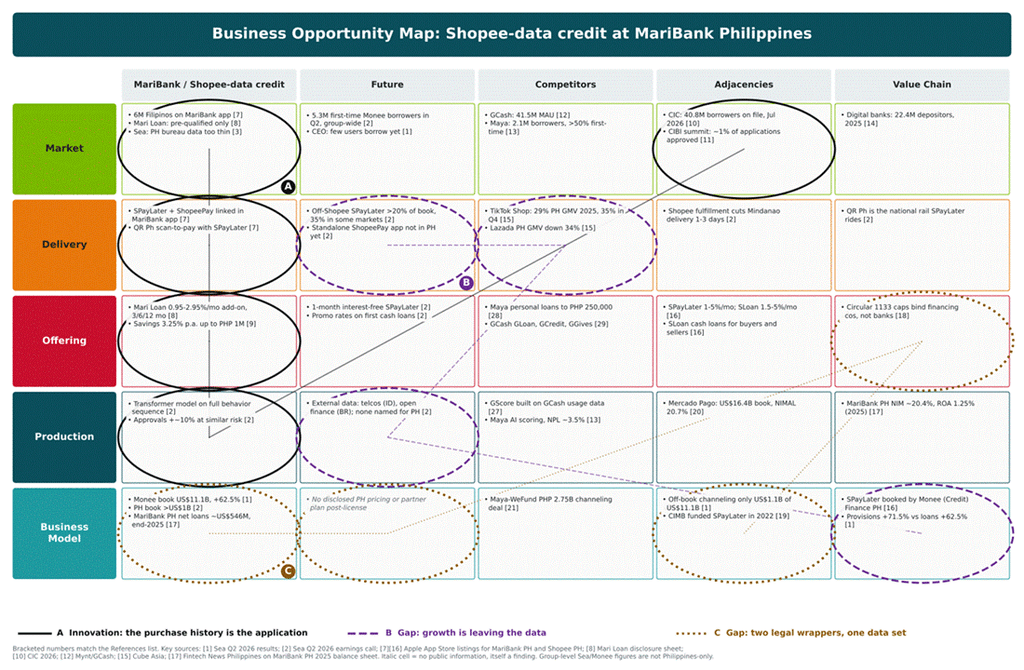
Figure 2. Business Opportunity Map with clusters. A (solid): the purchase history is the application. B (dashed): growth is leaving the data. C (dotted): two legal wrappers, one data set. Bracketed numbers match References. The italic Future/Business Model cell has no public information, which is itself a finding.
Cluster A. The purchase history is the application. It links the pre-qualified Mari Loan offer, the MariBank app that sits beside ShopeePay and SPayLater, the transformer model that reads a user’s whole history of actions in order, and the CIC’s coverage gap. Together they reveal the core innovation: credit that is decided before the customer asks. Sea says its newest models lifted approval rates about 10% at a similar level of risk. This cluster answers the High leadership pressure directly, and it works.
Cluster B. Growth is leaving the data. It links off-Shopee SPayLater, TikTok Shop’s rise, Sea’s list of outside data sources, and provisions that grow faster than loans. It reveals the main gap. Sea named the outside data it uses to score newer users: telco partnerships in Indonesia and Brazil’s open finance system. It named nothing for the Philippines. Meanwhile, Cube’s data shows TikTok Shop held 29% of Philippine top-platform e-commerce GMV in 2025 and 35% in the fourth quarter. Every peso a Filipino spends on TikTok Shop is a peso Shopee’s model never sees. This cluster sits under the two Medium-High pressures, environment and competition, and nothing yet answers them.
Cluster C. Two legal wrappers, one data set. It links Monee’s Philippine book above US$1 billion, MariBank’s own net loans, Circular 1133’s reach, the shrinking role of channeling, and the empty Future cell in the Business Model row. MariBank Philippines reported net loans of about US$546 million at the end of 2025, per Fintech News Philippines’ reading of its published balance sheet. Six months later, Sea put its Philippine loan book above US$1 billion. Even allowing for six months of growth, a large share of Sea’s Philippine credit appears to sit outside the bank, likely in the financing company that issues SPayLater. That is an inference from two different dates and two different reporting scopes, and it could be wrong. But the gap points to the open question the license creates: which entity holds which loans, under which rules, using which customer’s consent.
That empty cell is itself a finding. Sea has disclosed no Philippine plan for pricing, partners or product moves since the license took effect. Sea runs standalone ShopeePay apps in Indonesia, Thailand, Malaysia and Vietnam, and its next one is planned for Brazil. None has been announced for the Philippines, where the MariBank app plays that role for now. In Singapore, MariBank already offers Shopee sellers a business credit line linked to their shop. In the Philippines, SLoan cash loans for both buyers and sellers still come from the financing company, according to the Shopee app’s disclosure.
Now link the clusters to the balance sheet. Sea’s 90-day NPL ratio held at 1.0% in Q2 2026. That number gets quoted often. It hides a quieter trend.
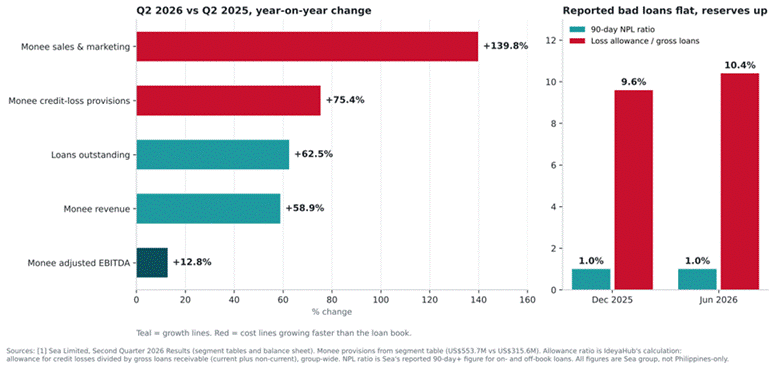
Figure 3. Monee’s cost lines are growing faster than its loan book, and reserves are rising while the reported NPL ratio stays flat. Source: Sea Limited, Second Quarter 2026 Results [1]. Allowance ratio is IdeyaHub’s calculation (allowance for credit losses / gross loans receivable, current plus non-current). All figures are Sea group-wide, not Philippines-only.
Get the next SEA banking case study in your inbox
Free. Unsubscribe anytime.
Monee’s credit-loss provisions rose 75.4% in a year, faster than its 62.5% loan growth. Its marketing spend more than doubled. Its adjusted EBITDA grew just 12.8%. On the group balance sheet, the allowance for credit losses rose from 9.6% of gross loans receivable in December 2025 to 10.4% in June 2026, by IdeyaHub’s calculation from Sea’s filings. Reported bad loans stayed flat. Reserves rose. Sea’s management says this is mix, not deterioration: off-Shopee lending carries lower rates, Brazil carries higher risk, and each segment’s NPL is stable. That may be true. It also means the headline 1.0% is a blend that tells you little about the Philippines.
The mismatch is clear. Cluster A, the real innovation, answers the leadership pressure inside Shopee. The newest growth, Cluster B, runs where the environment and competition pressures sit, and where the model has the least data. That is where this design is fragile.
Five stress tests for the Shopee-data thesis
The popular read on MariBank is simple: Sea owns better data, so it makes better loans. That claim bundles five separate bets. Each one deserves its own test, with the strongest case on both sides and the evidence that would settle it.
Test 1. Does Shopee data really predict repayment, or does selection flatter the numbers?
The case for. The engine produces results Sea can measure. Its newest models, which read each user’s actions as one long ordered history, lifted approval rates by about 10% at a similar level of risk. Monee’s 90-day NPL ratio held at 1.0% across US$11.1 billion of loans. MariBank Philippines has stayed in the black for two years, according to its president, and Fintech News Philippines reports a 1.25% return on assets for 2025. Compare that with the BSP’s 2024 finding that only two of the six licensed digital banks were profitable, and a sector NPL ratio of 6.16% in January 2026.
The case against. Mari Loan goes only to pre-qualified users. MariBank chooses its borrowers before they ask, from the people it has watched longest. A low default rate in that group proves the model ranks known customers well. It does not prove the model works on strangers. The 1.0% figure is also a blend across all of Monee’s markets and products. Sea does not publish a Philippine number, and it does not split results for first-time borrowers, who made up about 5.3 million new accounts in one quarter.
What would settle it. A Philippine NPL ratio, split by loan vintage and by on-Shopee versus off-Shopee use. If first-time and off-Shopee cohorts default at close to the core rate after 12 months, the data thesis holds. If they drift toward the digital-bank sector average, the edge was mostly selection.
Current read: holds for known users, unproven for new ones.
Test 2. Is the credit genuinely cheap for the borrower?
The case for. On headline price, Mari Loan is competitive. Its monthly add-on rate runs from 0.95% to 2.95%, and MariBank’s product page advertises no processing fees. The Shopee app lists SPayLater rates of 1% to 5% a month and SLoan rates of 1.5% to 5% a month, with a sample SLoan priced at 3.95% a month. Financing companies can legally charge up to 6% a month in nominal interest on small, short loans under BSP Circular 1133. Against the informal lenders many first-time borrowers would otherwise use, pre-approved credit with automatic repayment is a real improvement.
The case against. An add-on rate is charged on the original principal for the full term, even as the balance shrinks. MariBank’s own sheet shows that a 2.95% monthly add-on equals a 4.86% monthly contractual rate on a six-month loan. Late payment costs 0.17% a day on the overdue amount, about 5% a month. And Circular 1133’s caps bind financing and lending companies, not banks. As more Shopee-data credit moves onto the bank’s books, the legal ceiling on price goes away. The acquisition tools also deserve scrutiny. Sea says one-month interest-free SPayLater works because many users who start with it for convenience later switch purchases to paid installments. That is a sound business model. It is also a model built on convenience turning into debt.
What would settle it. Publish the share of borrowers on the lowest versus highest rate tier, and the share of interest-free SPayLater balances that convert to paid installments.
Current read: cheaper than most alternatives, but less cheap than the headline rate suggests.
Test 3. Will the data advantage survive a shift in where Filipinos shop?
The case for. Shopee’s lead in the Philippines is growing, not shrinking. Cube’s data puts Shopee at 55% of combined top-platform GMV in 2025, up from 50% in 2024, and Cube points out that Shopee buyers return more often than buyers on rival platforms, which makes its lead stickier than the share figure implies. Lazada’s Philippine GMV fell 34% in the same year. Sea’s logistics investment, such as faster fulfillment in Mindanao, keeps everyday purchases on the platform, which keeps the data flowing.
The case against. Both of those trends can be true while the blind spot still grows. TikTok Shop took 29% of Philippine top-platform GMV in 2025, up from 14% in 2023, and 35% in the fourth quarter. Its strongest category is beauty and personal care, a high-frequency purchase that says a lot about a household budget. GCash, with 41.5 million monthly users, sees bill payments, transfers and merchant QR spending that Shopee never sees. Sea’s answer elsewhere is outside data, from telcos in Indonesia and from Brazil’s open finance system. It has named no equivalent for the Philippines.
What would settle it. A named Philippine data partner, such as a telco or a utility, or MariBank joining BSP open finance as a data consumer. Without one, every point of share TikTok Shop gains is a point of underwriting signal Sea loses.
Current read: the core is secure; the edges are thinning.
Test 4. Is the credit engine getting healthier as it scales?
The case for. Monee’s revenue rose 58.9% to US$1.4 billion in Q2 2026, and its adjusted EBITDA reached US$288 million. Management says return on assets is stable within each country and product, and that the shift in mix is deliberate. Off-Shopee SPayLater and prime borrowers carry lower rates but cost less to acquire per peso lent. Absolute profit has grown every quarter.
The case against. Growth is getting more expensive per dollar lent. Monee’s adjusted EBITDA rose 12.8% while its loan book rose 62.5%. That works out to about 3.7 cents of quarterly EBITDA per dollar of loans in Q2 2025, falling to about 2.6 cents in Q2 2026, by IdeyaHub’s calculation using quarter-end loan balances. Credit-loss provisions grew 75.4% and marketing grew 139.8%. Group reserves rose from 9.6% to 10.4% of gross loans in six months while the reported NPL ratio stayed flat. One caveat cuts in Sea’s favor: Monee’s EBITDA also includes payments and other services, so the ratio is a rough proxy for credit returns, not an exact one.
What would settle it. Two more quarters of data. If provision growth falls back below loan growth by early 2027, the mix explanation holds. If the gap persists, the new segments are riskier than priced.
Current read: profitable and growing, but with falling returns on each new dollar.
Test 5. Does the digital-bank license fix the structure or add new risk?
The case for. The license puts Shopee-data credit under BSP bank supervision, which is stricter than SEC oversight of financing companies. A digital bank faces BSP capital and prudential rules, and its deposits are insured by PDIC up to PHP 1 million. Deposits are also a cheaper and steadier funding source than the borrowings a financing company has to raise. Philippine digital banks held PHP 138.5 billion in deposits at end-2025, up nearly 44% in a year, so the funding pool is deep.
The case against. The license adds a third legal entity to the same customer relationship. Shopee holds the shopping data. Monee (Credit) Finance Philippines issues SPayLater and SLoan. MariBank issues Mari Loan and hosts the SPayLater controls in its app. Each data handoff needs valid consent under the Data Privacy Act, and the National Privacy Commission has already banned online lenders that over-collected personal data. None of that suggests Sea is breaking the rules. It does mean the hardest regulatory question is not about credit risk. It is about who holds which data, for which purpose, under whose consent.
What would settle it. A clear public map of which entity books which product in the Philippines, and how customers consent to Shopee data being used in a bank decision.
Current read: the license strengthens funding and oversight, but makes data governance the main thing to watch.
The net judgment
Put the five tests together and a balanced picture emerges. Shopee data is a genuine underwriting edge for people Sea already knows well, and MariBank has turned that edge into a profitable, fairly priced product. The skeptics are wrong to call it hype. But the bulls are wrong to call it a moat. Sea’s own numbers show growth moving to borrowers and purchases the model sees less clearly, at higher cost per dollar lent. The model has not failed. It has simply not yet been tested where Sea is now taking it.
Stress-test scorecard
| Test | Current read | Pressure row it answers | Cluster |
| 1. Does Shopee data predict repayment? | Holds for known users; unproven for new ones | Customers (Medium) | A |
| 2. Is the credit cheap for borrowers? | Cheaper than most alternatives, less cheap than the headline rate | Customers (Medium) | A |
| 3. Will the data edge survive shifts in shopping? | Core secure; edges thinning | Competition (Medium-High) | B |
| 4. Is the engine healthier as it scales? | Profitable, but lower returns per new dollar lent | Leadership (High), Shareholders (Medium) | B |
| 5. Does the license fix the structure? | Stronger funding and oversight; data governance becomes the key risk | Environment (Medium-High), Stakeholders (Low-Medium) | C |
For a borrower, the practical takeaway is to compare Mari Loan on the contractual rate, not the add-on rate. For MariBank, it is to name a Philippine data source and publish local asset quality before growth gets ahead of evidence. For a regulator or analyst, it is to ask for a per-entity breakdown of Philippine loans and consent flows.
Workshop: Is your data a moat or a launchpad?
Use this worksheet on your own product, especially if it runs on data your company already owns.
| # | Question | Your answer |
| 1 | Which customers can your data already score, and which ones is your growth plan actually chasing? If the second group is larger, your data is a launchpad, not a moat. | |
| 2 | Which cost line is growing faster than the asset it supports? Name it, and say whether “mix” fully explains it or whether you are hoping it does. | |
| 3 | If a regulator asked which legal entity holds each customer relationship and under whose consent, could you answer in one page today? |
Tags: MariBank, Shopee, SPayLater, Mari Loan, Monee, Sea Limited, Alternative Credit Scoring, Digital Banking, Philippines Fintech, AI & Data in Financial Services
IdeyaHub newsletter
Enjoyed this case study?
Get the next deep dive on Southeast Asian banks, fintechs and insurers in your inbox. One email a week.
Free. Unsubscribe anytime.
References
1. Sea Limited Reports Second Quarter 2026 Results — Sea Limited / Business Wire https://cdn.sea.com/investor/2Q2026/wFBC39MbqnfLb3MGY6LP/2026.08.11%20Sea%20Second%20Quarter%202026%20Results.pdf
2. Full Transcript of Sea Limited’s Q2 2026 Earnings Call — Momentum Works, The Low Down https://thelowdown.momentum.asia/full-transcript-of-sea-limiteds-q2-2026-earnings-call/
3. Sea’s MariBank Wants to Export Its Singapore Digital Banking Playbook: First Stop, the Philippines — Fortune https://fortune.com/2026/08/03/sea-maribank-singapore-philippines-digital-bank/
4. BSP Grants Digital Bank License to MariBank — The Philippine Star https://www.philstar.com/starweek-magazine/2026/07/23/2544177/bsp-grants-digital-bank-license-maribank
5. MariBank Philippines Secures Official BSP Digital Banking License — Sea Limited newsroom (sea.com) https://www.sea.com/news/417
6. MariBank Philippines Is Country’s Seventh Digital Bank Licensee — GMA News https://www.gmanetwork.com/news/money/companies/995914/maribank-philippines-is-country-s-seventh-digital-bank-licensee/story/
7. MariBank PH app listing and product description — Apple App Store https://apps.apple.com/us/app/-/id1592249158
8. Mari Loan Product Disclosure Sheet; MariBank Credit product page — MariBank Philippines (maribank.ph) https://banking-aka-storage.maribank.ph/maribank/ph/cmps-website/file-hosting/Mari-Loan-Product-Disclosure-Sheet.pdf
9. MariBank Savings Account — MariBank Philippines (maribank.ph) https://www.maribank.ph/product/savings
10. The Role of Credit Information in Advancing Client Protection — Credit Information Corporation, via Microfinance Council of the Philippines https://microfinancecouncil.org/wp-content/uploads/2026/08/Breakout_CIC_Atty.-Ben-Baltazar.pdf
11. Data Gaps, Delinquency Constrain Lending in PH — Philippine Daily Inquirer https://business.inquirer.net/543108/data-gaps-delinquency-constrain-lending-in-ph
12. How the Philippines’ First Fintech Unicorn Is Minting Financial Inclusion — Mynt (GCash), Bloomberg Media sponsored content https://sponsored.bloomberg.com/article/mynt/how-the-philippines-first-fintech-unicorn-is-minting-financial-inclusion
13. Maya Named Best Digital Bank in the Philippines 2025 — Unbox PH https://unbox.ph/news/maya-best-digital-bank-ph-2025/
14. BSP on Guard as Digital Banks Face Profit Strain — Inquirer Plus https://plus.inquirer.net/?p=386072
15. E-commerce in Philippines: Market Size, Platforms and Trends 2026 — Cube Asia https://cube.asia/e-commerce-in-philippines/
16. Shopee PH app listing (Monee (Credit) Finance Philippines disclosure) — Apple App Store https://apps.apple.com/ph/app/shopee-ph-shop-online/id959841854
17. MariBank Philippines Stays in the Black for Two Years as Assets Hit US$1.16 Billion — Fintech News Philippines https://fintechnews.ph/70334/banking/maribank-philippines-profitability-asset-growth-2025/
18. SEC Strictly Implements Interest Rate Caps — Daily Tribune https://tribune.net.ph/2025/09/26/sec-strictly-implements-interest-rate-caps
19. CIMB Philippines Partners SeaMoney to Onboard 2.5 Million BNPL Customers in 2023 — Fintech News Singapore https://fintechnews.sg/67306/fintechphilippines/cimb-philippines-partners-seamoney-to-onboard-2-5-million-bnpl-customers-in-2023/
20. MercadoLibre (MELI) Q2 2026 Earnings Call Transcript — The Motley Fool, via Webull https://www.webull.com.au/news-detail/15393441825170432
21. Philippines: Digital Lender Maya Bank and WeFund Ink $48m Loan Deal — Crowdfund Insider https://www.crowdfundinsider.com/2024/05/225262-philippines-digital-lender-maya-bank-and-wefund-ink-48m-loan-deal/
22. SEC Memorandum Circular 3 on Interest Rate Ceilings: Banks Not Covered — Conventus Law https://conventuslaw.com/?p=87328
23. MariBank Philippines Gets Digital Bank Licence — Fintech News Philippines https://fintechnews.ph/72540/digital-banking-news-philippines/maribank-digital-bank-licence-philippines/
24. Joint Press Statement Against Illegal Practices of Online Lending Apps — National Privacy Commission (privacy.gov.ph) https://privacy.gov.ph/?p=13124
25. BSP Targets to Complete Open Finance Oversight Body This Year — BusinessWorld https://www.bworldonline.com/?p=387196
26. What Is the Mari Business Loan (Credit Line) Shopee Seller Promotion? — MariBank Singapore Help Centre https://www.maribank.sg/help-centre/article/10978-what-is-the-mari-business-loan-credit-line-july-august-shopee-seller-promotion
27. GCash Loan Disbursements Hit P2.5 Billion in 10 Months — GMA News https://gmanetwork.com/news/money/companies/834763/gcash-loan-disbursements-hit-p2-5-billion-in-10-months/story
28. Maya Redefines Banking With Record Growth in 2024 — Maya (maya.ph) https://www.maya.ph/stories/maya-redefines-banking-with-record-growth-in-2024
29. GCash Says P40 Billion Worth of Loans Disbursed — BusinessWorld https://www.bworldonline.com/?p=476733
30. Only Two of Six Philippine Digital Banks Are Profitable, Says BSP — Fintech News Philippines https://fintechnews.ph/62144/digital-banking-news-philippines/only-two-of-six-philippine-digital-banks-are-profitable-says-bsp/
31. SE Asia’s E-commerce GMV Hit $157.6b in 2025: Momentum Works — DealStreetAsia https://www.dealstreetasia.com/stories/momentum-works-report-2025-479044
32. CIC Resolves Lack of TIN IDs Among Microfinance Borrowers; Database Now Covers 18.2M Filipinos — Credit Information Corporation https://creditinfo.gov.ph/node/682
33. Philippines’ MariBank Gets Digital Licence From BSP — The Asset https://www.theasset.com/article/56831/philippines-maribank-gets-digital-licence-from-bsp
34. SEA Q2 Earnings Call Highlights — MarketBeat https://www.marketbeat.com/instant-alerts/sea-q2-earnings-call-highlights-2026-08-11/