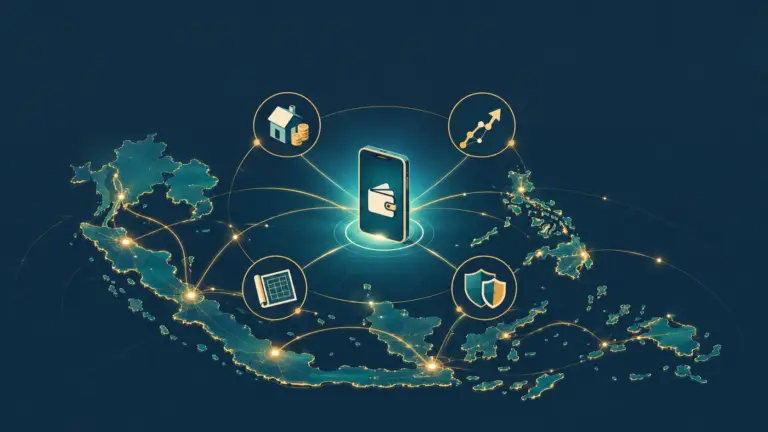
In eight months, Visa Direct got wired into GCash, RCBC, and BPI, three competitors who now share the same invisible pipe, for a market nobody has actually measured.
| Visa Direct isn’t a new way to send money. It’s Visa turning itself into the settlement layer that three competing Philippine financial giants now share, on both sides of the same cross-border transaction. 1. A real-time pipe, not a new front door. Visa Direct pushes funds straight to a card, bank account, or digital wallet in real time across more than 195 countries and 150 currencies, letting a bank plug global transfers into an app it already owns instead of routing them through a correspondent bank’s multi-day wire chain. 2. One rail now sits on both sides of the same flow. Between August 2025 and April 2026, Visa embedded this rail as an outbound transfer option inside RCBC’s and BPI’s own apps and as an inbound funding option inside GCash’s wallet, three rivals now running the same invisible plumbing with no shared brand and no public acknowledgment that they’re plugged into the same network. 3. None of the three launches comes with a number that matters. Visa, RCBC, BPI, and GCash have each published user counts and preference surveys, but not one transaction volume, adoption rate, fee, or speed figure specific to Visa Direct itself, and BPI’s own outward remittance page still doesn’t mention it months after the launch announcement. None of that shows up in a press release. It shows up the next time someone has to pay a deadline in another country’s currency before a bank on the other side of the world closes for the day. |
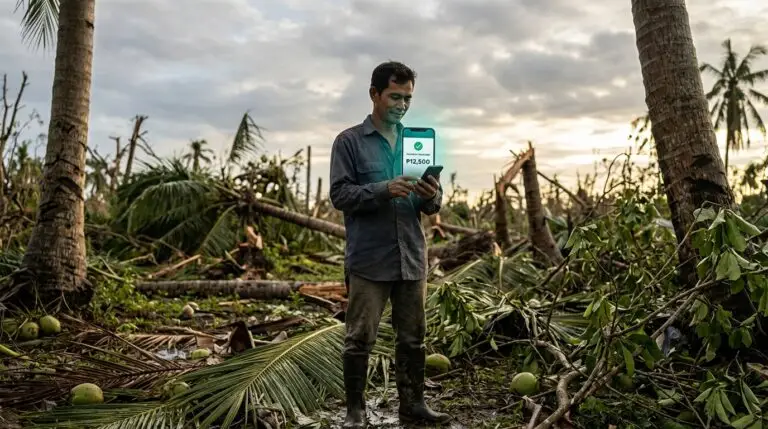
A hardware retailer in Cebu owes a supplier in Guangzhou 480,000 pesos by Friday, or the next container of fittings doesn’t ship. For decades, the process for that payment has looked the same at almost every Philippine bank: fill out a telegraphic transfer form, online or at a branch, pay BPI’s own published service charge of 600 pesos from a peso account, or 14 US dollars from a dollar account, add a documentary stamp tax of 60 centavos for every 200 pesos sent, and then wait while the payment clears a chain of correspondent and beneficiary banks whose own charges BPI’s fee schedule describes only as variable and “not BPI charges,” sometimes deducted straight from whatever the recipient ends up receiving. Wise, the international transfer company, tells its own customers that a SWIFT wire like this typically takes one to five business days depending on the route. A payment sent Wednesday can still miss a Friday deadline, depending on which banks sit between Manila and Guangzhou, and how many of them take their cut and their time.
Since April 2026, if that retailer banks with BPI, and since August 2025 if she banks with RCBC, the same payment can move differently. Instead of a wire form entering a queue of correspondent messages, it becomes a real-time push payment riding Visa’s own settlement network, arriving at the recipient’s bank account, card, or wallet directly, without a chain of intermediary banks each adding a day and a fee. That capability has a name, Visa Direct, and in a single eight-month stretch it went from a pilot with one Philippine bank to a live feature inside three of the country’s largest, most competitive financial apps. The retailer in Cebu is a composite, not a documented case study. But every number and process behind her story checks out against what BPI, RCBC, Visa, and Wise have each published, and it’s a fair picture of what changes, and what still hasn’t been proven, when a card network stops selling swipe fees and starts selling the pipe itself.
The problem Visa is actually solving, and the one it isn’t
Visa’s own press materials frame this as a story about overseas Filipino workers sending money home faster. That’s the emotionally resonant version, and it isn’t wrong exactly, but it isn’t what RCBC and BPI actually launched. Both of their Visa Direct deployments move money outbound, from a Philippine resident’s account to a recipient somewhere else in the world. RCBC’s press release describes it as enabling “outbound cross-border payments for Filipino consumers and businesses.” BPI’s release, from April 29, 2026, is explicit that the new option serves “retail customers” and “micro, small, and medium enterprises” sending money out, and that its purpose is removing “the traditional complexity of cross-border transfers.” Neither release mentions a Filipino worker abroad sending wages home. That’s a different product, and Visa built it separately.
The inbound side of the story belongs to a different partnership entirely. In January 2026, Visa and GCash, the country’s dominant e-wallet with more than 90 million users, announced two features built on the same Visa Direct rail: anyone anywhere in the world can push money directly into a GCash wallet, and the more than 10 million Filipinos working overseas can use a foreign-issued Visa card to fund their GCash Overseas accounts. That is the OFW remittance story, and it runs through GCash, not through RCBC or BPI.
So the real question isn’t “how does Visa help OFWs send money home.” It’s two separate, narrower questions that the press coverage tends to blur together: why would a Philippine bank route outbound transfers, historically a low-volume, high-friction corner of retail banking, through a card network instead of its existing correspondent relationships, and why would Visa build the inbound and outbound versions of the same capability with three different partners instead of one integrated product.
There are at least three ways to read the outbound piece, and they don’t all point the same direction. One reading is defensive: Visa is protecting card-network relevance against domestic real-time payment rails. The Bangko Sentral ng Pilipinas reported that digital payments reached 64.7% of total retail transaction volume in 2025, up from 57.4% in 2024, and that PESONet, the country’s batch electronic transfer scheme, overtook check payments nationwide for the first time that year. QR Ph overtook debit and credit cards in transaction volume too, processing 2.47 billion transactions worth 1.16 trillion pesos. If domestic real-time rails are eating into card volume, a card network has a reason to expand into territory those rails don’t reach.
That reading mostly doesn’t survive contact with the evidence, though. InstaPay and PESONet move money domestically, peso to peso, bank to bank inside the Philippines. Neither touches a cross-border transfer to Guangzhou or Melbourne. Whatever competitive pressure Visa faces from PESONet and QR Ph is a separate fight, playing out in domestic debit and point-of-sale volume, where Visa is in fact still winning: GoTyme Bank, the digital bank backed by Tyme Group and the Gokongwei Group, became the Philippines’ top Visa debit card issuer by January 2026, with more than 8 million Visa debit cardholders and payment volume growing over 150% year-on-year, according to Visa’s own award announcement. A network losing share to domestic rails doesn’t also happen to be winning the domestic debit race with the same partner ecosystem. The defensive story doesn’t fit the timeline or the geography of what’s actually shrinking.
A second reading fits the evidence better: this is Visa chasing a genuinely underpriced market. The World Bank’s Remittance Prices Worldwide report for the third quarter of 2025 put the global average cost of sending a $200 remittance at 6.36%, more than double the United Nations’ 2030 target of 3%. Banks were the most expensive channel measured, averaging 14.99% of the amount sent, against 4.72% for dedicated money transfer operators and 4.59% for digital-first channels generally. That’s a global figure, not a Philippine-specific one, and no comparable Philippine breakdown appears to exist in the public record, which is itself worth noting before anyone treats these numbers as proof of what BPI or RCBC customers actually pay. But directionally, it explains the incentive clearly: a bank’s own correspondent-banking wire process is, on average worldwide, the single most expensive way to move money across a border, and Visa is offering banks a way to make that specific product both cheaper to run and faster to deliver, without the bank losing the customer relationship to a specialist like Wise. RCBC’s chief innovations officer, Lito Villanueva, described the tie-up as making “global money transfers faster” as part of a push for “inclusive, tech-enabled banking.” That’s marketing language, but it points at a real gap: the alternative to Visa Direct isn’t a modern fintech competitor’s product, it’s the bank’s own decades-old wire process, and that’s a low bar to clear.
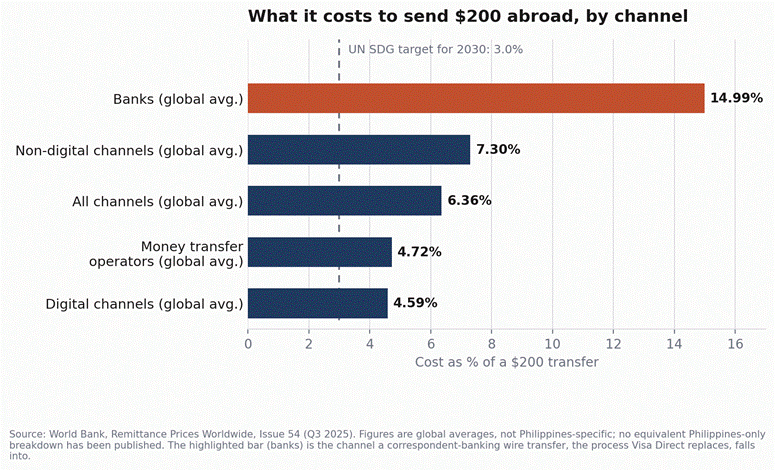
Figure 1. Banks are, on average worldwide, the single most expensive channel for moving money across a border, more than three times the digital-channel average and five times the UN’s 2030 target. Source: World Bank, Remittance Prices Worldwide, Issue 54 (Q3 2025). Global averages; no Philippines-specific breakdown has been published.
One rail, three doors, eight months
Line up the three announcements and a pattern appears that none of the individual press releases states outright. August 4, 2025: Visa and RCBC launch Visa Direct for outbound consumer and business transfers, the first Philippine bank to offer it. January 12, 2026: Visa and GCash launch the inbound version, letting money flow into GCash wallets from anywhere in the world and letting overseas Filipinos fund their accounts with foreign Visa cards. April 29, 2026: Visa and BPI launch a second outbound deployment, this time explicitly including small and medium businesses alongside retail customers.
That’s not three unrelated partnership announcements. It’s the same underlying rail, described by Visa in each release with slightly different network statistics, 8.5 billion endpoints across more than 190 countries and 160 currencies in the RCBC release, 12 billion endpoints across more than 195 countries and 150 currencies eight months later in the BPI release, installed as a feature inside three financial products that compete directly with each other for the same Filipino customer’s primary banking relationship. RCBC and BPI compete for the same retail deposit and MSME banking customer. GCash competes with both of them for that customer’s day-to-day money movement. None of the three would ordinarily agree to share infrastructure with the others in a way that was visible to the customer. Visa Direct lets them share it invisibly instead. The customer sees “send money abroad” inside their BPI app, or “receive money” inside GCash, with no Visa branding forcing the comparison.
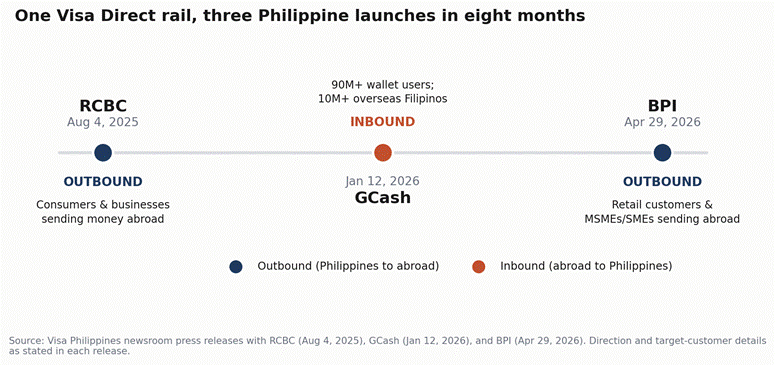
Figure 2. The same Visa Direct rail went live inside three competing Philippine financial apps in eight months, first as an outbound feature, then inbound, then outbound again with a wider customer base. Source: Visa Philippines newsroom press releases with RCBC, GCash, and BPI.
That’s what makes this a story about embedded finance specifically, rather than just another remittance product launch. Embedded finance, in its plainest form, is a non-financial or adjacent company building a financial capability into its own product instead of routing customers to a separate financial provider. What’s unusual here is that the entity doing the embedding on both sides is a bank or a wallet, both already licensed financial institutions, and what they’re embedding isn’t a full financial product but a single settlement rail from a card network that historically made its money on point-of-sale swipe fees, not on wire transfers. Visa isn’t trying to become a remittance company the way Wise or Western Union are remittance companies, with a consumer-facing brand competing for the customer’s attention. It’s trying to become the layer none of its partners’ customers ever have to think about, the way a payment processor sits invisibly behind a checkout button. If that works, Visa collects a fee on both legs of the same underlying customer behavior, sending and receiving, without ever appearing on either side of the transaction as a brand the customer chose.
What the transaction actually looks like now, and what still isn’t public
Here’s where the story gets less clean than the announcements suggest. BPI’s own consumer-facing page for sending money abroad, reviewed for this issue, still advertises a promotional fee of 10 US dollars for digital outward transfers, a promotion that expired on June 30, 2024. Its separate, current fee schedule lists the standard charges above, 600 pesos or 14 dollars, the documentary stamp tax, and the unpublished correspondent and beneficiary charges, and caps a single digital transfer at 10,000 US dollars or 500,000 pesos regardless of which currency the sending account holds. Neither page mentions Visa Direct by name, months after BPI’s own press release announced the partnership. The bank’s public documentation for the exact product category Visa Direct is supposed to improve still displays an expired 2024 promotion and no visible option, fee schedule, or processing-time estimate for the new one.
That gap matters because it’s the same gap this newsletter has found in nearly every Philippine bank digital-launch story this year: real partnership, real technology, zero public evidence of what a customer actually experiences once they use it. Neither RCBC nor BPI has disclosed how many customers have made a transfer through Visa Direct, how much volume has moved through it, what it costs a retail customer or an MSME compared with the old wire process, or how long a transfer actually takes end to end once it leaves the sender’s phone. Visa’s own press releases lean entirely on consumer preference survey data, the kind of figure a company commissions to make a launch sound urgent: 74% of Filipinos say they prefer sending remittances digitally, 66% prefer receiving them digitally, 45% cite digital remittances as safe. Those numbers describe an attitude, not a transaction. They say nothing about what happens after a customer opens the BPI app and looks for the feature.
Contrast that silence with what a genuine best-in-class competitor already discloses without being asked. Wise publishes its exact fee and exchange-rate math for every corridor on its own website: a 50,000-peso transfer to Australian dollars carries a fee in the range of 157 to 168 pesos, well under 1% of the amount sent, and the company states that 74% of its transfers arrive in under 20 seconds and 95% arrive in under a day. Whatever Visa Direct delivers for a BPI or RCBC customer, nobody outside those two banks currently knows whether it comes close to that benchmark, beats it, or simply replaces one undisclosed number with another. The honest reading is that Visa Direct is very likely faster and probably cheaper than the bank’s prior wire process, because real-time push payments structurally avoid the multi-bank correspondent chain that makes SWIFT wires slow. But “probably better than a bad baseline” and “competitive with the best specialist alternative” are different claims, and only the banks holding the data can currently tell the difference.
The scale of the underlying opportunity is also harder to pin down than the framing suggests. The Bangko Sentral ng Pilipinas tracks inbound OFW cash remittances precisely and publicly: a record 35.634 billion US dollars in 2025, up 3.3% from 34.49 billion in 2024, with personal remittances, a broader measure that includes in-kind transfers, reaching 39.619 billion. That inbound flow is the figure every news outlet quotes, and it’s the market GCash’s inbound Visa Direct feature is built to touch. But the outbound market, Filipinos and Philippine businesses sending money abroad for tuition, medical care, supplier payments, or supporting relatives who’ve since migrated, has no equivalent published figure. No BSP release, no industry report turned up in researching this issue, sizes that outbound flow the way the inbound OFW figure is sized every month. RCBC and BPI are both building a product for a market whose actual size neither the regulator nor either bank has published. That doesn’t mean the market is small. It means nobody betting on this story, including the two banks that built it, can currently point to a number and say how big the prize actually is.
Figure 3. What changed and what still hasn’t been disclosed, by product
| RCBC Visa Direct (Aug 2025) | GCash Visa Direct (Jan 2026) | BPI Visa Direct (Apr 2026) | |
| Direction of money movement | Outbound (PH to abroad) | Inbound (abroad to PH wallet) | Outbound (PH to abroad) |
| Target customer | Consumers, businesses | GCash’s 90M+ users, 10M+ overseas Filipinos | Retail, MSMEs and SMEs |
| Fee disclosed for Visa Direct itself | Not disclosed | Not disclosed | Not disclosed |
| Transfer speed disclosed | Not disclosed (real-time by design) | Not disclosed | Not disclosed |
| Adoption/volume since launch | Not disclosed | Not disclosed | Not disclosed |
| What is disclosed instead | Preference survey stats | User base size, survey stats | Preference survey stats |
Who this actually works for, and who’s still guessing
Judge this launch by the reader, because “does Visa Direct work” doesn’t have one answer.
For the retail customer or small business owner sending money abroad, the honest verdict is cautious optimism. Replacing a multi-day correspondent wire with a real-time push payment, inside an app the customer already uses, with no separate account to open, is a real improvement in convenience even before a single peso of savings is confirmed. The Cebu retailer in this issue’s opening scenario almost certainly comes out ahead on speed, and probably comes out ahead on cost too, since the alternative she’s replacing, a bank wire, is the single most expensive channel the World Bank measures globally. But she has no way to verify that from her bank’s own disclosures today, and neither does anyone reading this.
For RCBC and BPI, the strategic logic holds up better than the marketing copy does. Both banks get a modern, real-time cross-border feature without building or licensing their own international payment infrastructure, using a network they already have a card-issuing relationship with. That’s a genuinely efficient way to close a product gap against fintech competitors like Wise without a multi-year build. The risk isn’t the product decision, it’s the disclosure gap: a bank that won’t say how many customers actually use a new feature eight or nine months after announcing it either doesn’t have flattering numbers yet, or hasn’t prioritized proving the investment worked. Either explanation should worry a shareholder more than it should worry a customer.
For Visa, this is close to the ideal embedded-finance outcome: infrastructure revenue on both legs of a transaction, distributed across three separate brand relationships, with none of the customer-acquisition cost or reputational exposure of running a consumer remittance brand itself. The risk sits in dependency. Visa is now betting a meaningful piece of its future cross-border relevance in the Philippines on three partners executing well on a feature that, from the outside, doesn’t yet look fully integrated into at least one of them.
For an outside analyst or regulator, the fair conclusion is that this is a promising infrastructure play resting on almost no public evidence. The Bangko Sentral has been explicit and specific about tracking inbound remittances and domestic digital payment share, publishing monthly figures anyone can check. It has published nothing comparable for outbound cross-border flows, the exact category RCBC and BPI just built new products for. A regulator focused on financial inclusion and cash-lite policy goals, as BSP has stated its Digital Payments Transformation Roadmap is, has a reasonable interest in knowing whether products like this are actually reaching the MSME segment both banks say they’re targeting, not just running as a press-release feature nobody surfaces in the app.
Workshop: is the infrastructure actually live, or just live in the press release?
Use these questions on the next “embedded finance” or “partnership” launch that crosses your desk, whether you’re evaluating a vendor pitch, a competitor’s announcement, or your own team’s roadmap.
| # | Question | Your answer |
| 1 | Can you find the feature without being told it exists? Go to the actual product, app, or website the launch claims to have changed, and look for the feature the way a real customer would. If you can’t find it, or the surrounding pages still describe the old process, the launch may be ahead of the product. | |
| 2 | What’s the one number the company with the most to prove refuses to publish? Every credible launch discloses something concrete: a fee, a speed, a volume, an adoption rate. If every public source leans on survey sentiment instead of transaction data, treat the launch as unproven until that number appears. | |
| 3 | If this infrastructure sits inside two competitors at once, what does each of them actually gain that the other doesn’t? Shared infrastructure isn’t automatically a red flag, but naming the distinct advantage each partner gets tells you whether it’s a genuine strategic fit or a vendor relationship dressed up as one. |
Hit reply with what you found. A future issue will feature one submission, anonymized on request, with a real breakdown of what held up and what didn’t.
Tags: Visa Philippines · Visa Direct · Embedded Finance · RCBC · BPI · GCash · Cross-Border Remittances · Philippine Fintech
References
- Visa and RCBC partner to launch Visa Direct, enabling seamless international money transfers in the Philippines, Visa Philippines
- Visa and BPI partner to launch Visa Direct, enabling outbound international transfers for Filipino businesses, Visa Philippines
- Visa and GCash partner for seamless cross-border account funding solutions for Filipinos and tourists, Visa Philippines
- GoTyme Bank reach #1 Visa debit card milestone through unprecedented growth, Visa Philippines
- GoTyme Bank tops Visa debit market in Philippines, Philstar.com
- Visa, BPI launch cross-border payment service, Daily Tribune
- Visa Direct Goes Live on the BPI App to Enable Faster Cross-Border Remittances, Fintech News Philippines
- BPI Outward Remittance / Send Money Abroad, Bank of the Philippine Islands
- Outward remittance fees, Bank of the Philippine Islands
- How long do SWIFT transfers take?, Wise
- Send Money to Australia from Philippines, Wise
- Remittance Prices Worldwide, Issue 54 (Q3 2025), World Bank
- OFW remittances soar to all-time high $35.63 billion in 2025, BusinessWorld Online
- Overseas Filipino Cash Remittances, Bangko Sentral ng Pilipinas
- Digital payments accounted for 64.7% of total payments in 2025, says BSP, GMA News Online
- Cheaper Transfers and QR Ph Scans Push Nearly 65% of PH Payments Online, BSP, BitPinas