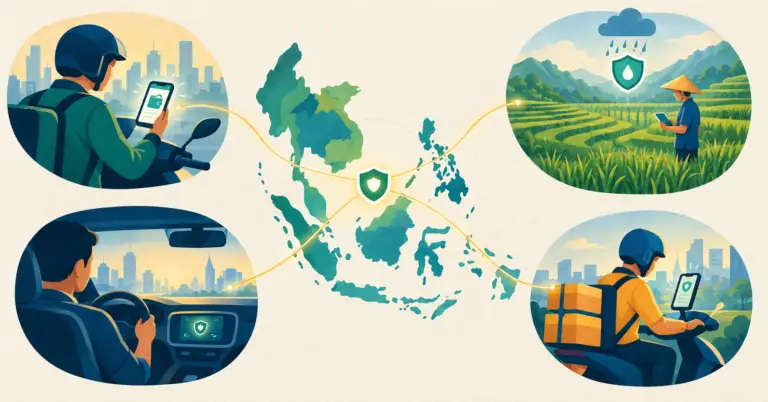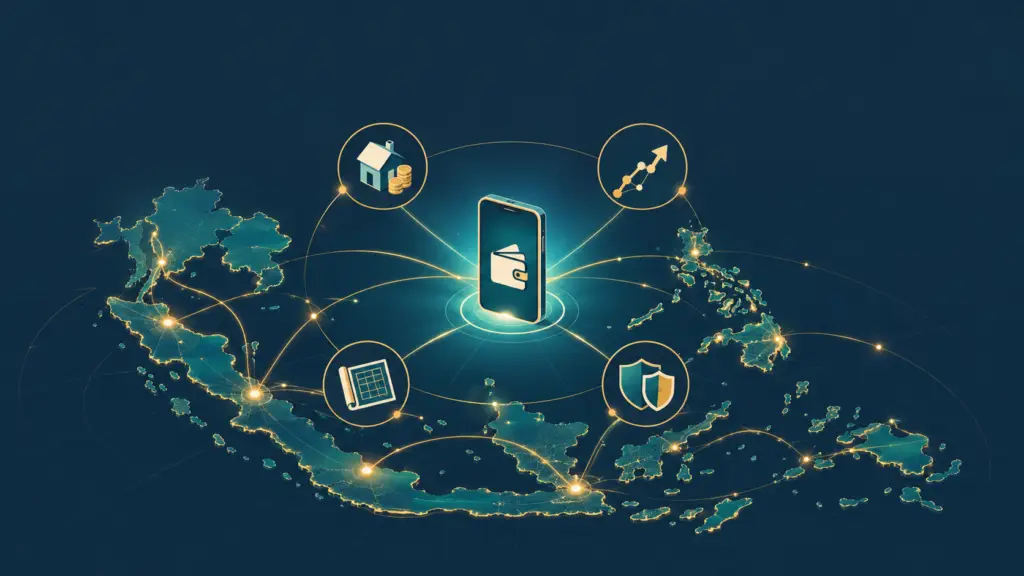
Every quarter, another Southeast Asian fintech announces a raise, a license, or a “record” user number. Most of that noise won’t matter in three years. A small number of companies in this region have built something that lasts, and when you line them up next to each other, the survivors keep passing the same four checks. The rest usually fail at least one.
This isn’t a theory pulled from a pitch deck. It’s what shows up when you look closely at who’s actually making money in Southeast Asian fintech right now, not who raised the most, but who turned a real problem into a business that competitors can’t easily copy. Four things have to be true at once: the company is solving a need people actually have, it’s riding a shift that isn’t going away, it borrowed a business model that already works somewhere else instead of inventing one from scratch, and it stitched together what it sells, who it sells to, how it builds the product, and how it gets that product to people in a way that’s genuinely hard to replicate.
Run that test against the region’s actual fintech players, GCash, Tonik, GXS Bank, Bank Jago, Xendit, and Kredivo, and the pattern gets sharp fast.
In This Issue
- Why half of Southeast Asia’s adults still don’t have a bank account, and why that gap is the whole opportunity, not a footnote
- The three infrastructure shifts, from embedded finance to real-time cross-border rails, turning “unbanked” into a solvable problem instead of a permanent one
- Why the region’s fintech winners didn’t invent new financial products; they imported proven ones and pointed them at underserved markets
- Inside the specific moats behind GXS Bank, Bank Jago, and Tonik, and why a rival can’t just copy the code
- What to watch through the rest of 2026: GCash’s IPO, GXBank’s expansion, and whether Project Nexus goes live on schedule
- A four-question workshop to stress-test your own fintech idea or portfolio bet
The Framework at a Glance
| PROVEN BUSINESS MODEL Borrowed, not invented: BNPL, neobank licensing | ||
| STRUCTURAL TREND Embedded finance, Project Nexus, stablecoins | PROFITABLE SEA FINTECH | BASIC NEED 300M+ unbanked and underbanked adults |
| THE MOAT Offering x Market x Production x Delivery, combined uniquely |
That’s the whole model: a real need, sitting inside a trend with staying power, served through a business model imported from a market that already proved it, defended by a combination of offering, market, production, and delivery that’s hard to copy. Miss one corner and the business is fragile even if the other three are strong. The rest of this issue works through each corner with the companies actually doing it.
The need isn’t a slide. It’s 300 million adults in Southeast Asia.
Start with the least glamorous fact in Southeast Asian finance: half the adult population still doesn’t have a formal bank account. Bain’s most recent read on the region puts it plainly: roughly 50% unbanked, another 24% underbanked, and only about a quarter of adults fully served by a bank. Compare that to 95% banking penetration in the US or UK and the gap stops looking like a rounding error. It’s the whole market.
Indonesia is the clearest single-country picture. Bank Jago’s own data, pulled from a University of Indonesia study done with GoPay, found that one in five GoPay users has no active bank account at all, and national banking penetration sits at roughly 61.7%. These aren’t rural subsistence farmers with no phone. They’re Gojek riders, Shopee sellers, and warung owners, people already living a digital life through an app, just locked out of the formal banking rail underneath it.
This is why “basic need” as a starting point isn’t a soft, feel-good line for an investor deck. It’s the reason Bank Jago and GoPay didn’t build a marketing campaign. They built a button. Inside the Gojek app, a verified GoPay user can now open a real bank account with no fee and no minimum balance, and move money between GoPay and Jago with zero top-up charge. The need existed for years. What changed is that someone finally put the fix inside the app people were already using ten times a day.
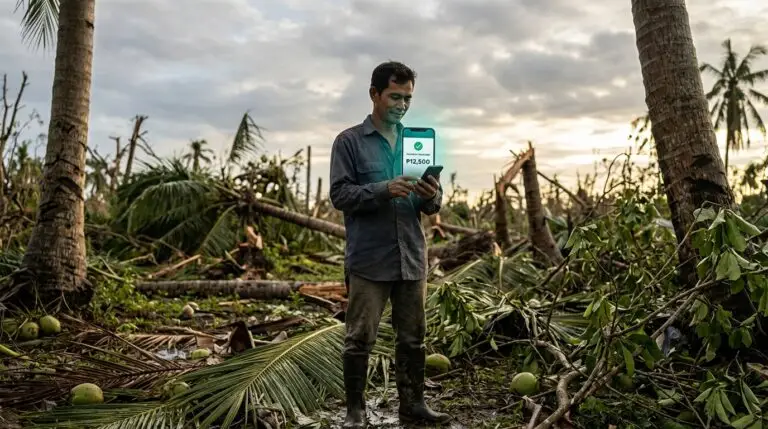
Tonik Bank in the Philippines tells the same story from the lending side. The company’s own framing is unusually honest for a bank: it calls itself “a credit-led institution, not a user platform.” Its target customer is explicitly the roughly 90% of Filipinos without meaningful access to formal credit, not the banked minority everyone else is fighting over. That single choice is why Tonik became, in the first quarter of 2026, the first standalone digital bank in the Philippines to post sustained profitability, with a loan book that grew 2.3x year-on-year to $110 million and a net interest margin of 51%, among the highest in the market. Serving the underserved wasn’t charity positioning. It turned out to be the higher-margin business: Tonik states plainly that revenue per lending client runs about 20 times higher than revenue per payments-only client.
Southeast Asia’s fintech trends: structural, not seasonal
A real need isn’t enough on its own. Plenty of underserved markets sit untouched for decades because nobody can serve them profitably. What changed the math in Southeast Asia over the past two years is infrastructure, not sentiment.
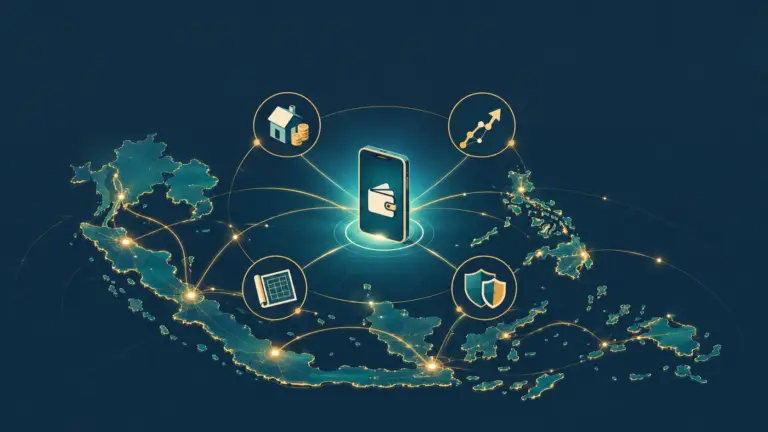
Three shifts matter here, and none of them are hype cycles. First, embedded finance stopped being a buzzword and became default behavior: recent regional survey data puts the number at 77% of Southeast Asian consumers already using embedded finance through a wallet, a BNPL checkout, or an in-app loan. Second, central banks stopped talking about cross-border payment rails and started shipping them. Project Nexus, the initiative linking the domestic instant-payment systems of Malaysia, Singapore, Thailand, Indonesia, and the Philippines, is moving toward live implementation, and ASEAN cross-border QR payments already hit roughly 12.9 million transactions in the first half of 2025 alone, per Bank Negara Malaysia’s governor. Third, stablecoins moved from speculative asset to settlement tool: the Singapore-dollar-pegged XSGD has processed more than S$8 billion in transactions since mid-2025.
What makes this a “sustaining” trend rather than a passing one is who’s building it. This isn’t three startups experimenting. It’s five central banks coordinating settlement infrastructure, alongside the ASEAN Digital Economy Framework Agreement standardizing data governance and digital payments regulation across the bloc. When the plumbing is being laid by regulators, not just chased by founders, the trend has a floor under it. A fintech built for cash-based Southeast Asia in 2018 needed to convince people to go digital. A fintech built in 2026 gets to plug into rails governments are already laying.
Southeast Asia’s fintech startups borrow the model. They don’t invent one.
Here’s the part that surprises people outside the industry: almost none of Southeast Asia’s fintech winners invented a new financial product. They took a business model already proven in a mature market and re-pointed it at an underserved one.
Buy-now-pay-later is the cleanest example. Installment lending is centuries old. What Kredivo, Akulaku, Atome, and Shopee’s SPayLater did was take a proven consumer credit format and wire it directly into checkout flows across Indonesia’s e-commerce boom. It worked because the model didn’t need explaining: “pay a little now, pay the rest later” translates instantly, even to a first-time borrower with no credit history. As of late 2025, outstanding BNPL balances in Indonesia alone hit roughly IDR 37.4 trillion (about $2.2 billion) across nearly 31.5 million active accounts, and the market is projected to reach $13.6 billion by 2030.
Digital banking followed the same import-and-adapt path. The “neobank” playbook (mobile-only account opening, no branch network, app-based everything) was proven in the UK and parts of Europe years before Southeast Asian regulators opened digital banking licenses. Singapore issued its digital bank licenses; the Philippines’ central bank issued its first standalone digital banking license, BSP License No. 001, to Tonik in 2021; Indonesia’s OJK cleared the path for GoTo and Sea Group-backed banks to convert existing lenders into digital-first ones. None of this required inventing a new category of bank. It required proving the imported model could survive local underwriting risk and thin credit files, which is exactly where the next factor comes in.
Malaysia’s rollout shows the same import-and-adapt logic playing out in real time. Bank Negara Malaysia handed out five digital banking licenses, and by late 2024 GXBank, backed by the same Grab-Kuok Brothers-Singtel consortium behind GXS in Singapore, had already pulled ahead of every other digital bank in the country, leading the sector with roughly RM2.16 billion (about $489 million) in customer deposits. That’s not a coincidence of timing. It’s the same parent group re-running a playbook it had already proven worked one border over, adjusting only for local licensing rules and consumer habits. Southeast Asia’s fintech map increasingly looks like a handful of proven templates, BNPL, ecosystem-embedded digital banking, and infrastructure-as-a-service, getting stamped across five or six markets by the operators who got the formula right the first time.
Southeast Asia’s fintech moat: how the pieces fit together
A real need, a durable trend, and a proven model will still lose to a competitor if the business itself is easy to copy. The companies actually pulling ahead in Southeast Asia have combined four specific things, what they sell, who they sell it to, how they build it, and how they deliver it, in a way a rival can’t just clone by writing similar code.
Take GXS Bank, the Grab-Singtel digital bank in Singapore. What it sells is FlexiLoan, a personal loan where the borrower, not the bank, sets the amount (from as little as S$200), the tenure, and the repayment date, with interest calculated daily and no penalty for paying early. Who it sells to is deliberate: self-employed workers and gig earners, roughly 15% of whom have no traditional credit bureau file at all. How it builds the product is the actual moat: with customer consent, GXS overlays a proprietary “ecosystem risk score” built from Grab and Singtel transaction data on top of conventional credit bureau scoring, letting it underwrite people a conventional bank would simply decline. And how it delivers the product closes the loop: FlexiLoan lives inside the Grab app millions of Singaporeans already open daily for rides and food delivery. A competitor bank can copy the loan terms in an afternoon. It cannot copy Grab’s five years of ride and delivery transaction history on that same customer, and it cannot get inside the Grab app to reach them at the moment of financial need. That’s the barrier.
Figure: GXS FlexiLoan’s moat, mapped to the business model wheel
| Offering | Market |
| FlexiLoan: the borrower sets the amount, tenure, and repayment date; interest calculated daily with no early-repayment penalty | Self-employed workers and gig earners; roughly 15% have no traditional credit bureau file |
| Production | Delivery |
| A proprietary “ecosystem risk score” built from Grab and Singtel transaction data, layered on top of conventional bureau scoring | Embedded inside the Grab app, already opened daily by millions of Singaporeans for rides and food delivery |
Bank Jago and GoPay run the identical playbook from the deposit side rather than the lending side. The offering is a full, licensed bank account. The market is the fifth of GoPay’s user base sitting on an e-wallet with no bank account behind it. The production advantage is GoTo’s transaction and identity data feeding a faster, lower-friction account-opening flow than a standalone bank could offer. Delivery is the whole point: the account opens inside the Gojek app itself, the same app someone already used that morning to order breakfast. No unaffiliated bank gets that placement.
Tonik’s version of the same combination sits on the lending side too, but through a different channel: rather than leaning on a super-app’s transaction data, it built employer-channel salary-deduction lending and merchant installment financing directly, alongside its own digital underwriting. The result, an 82% loan-to-deposit ratio and the highest among Philippine digital banks, shows a bank that isn’t sitting on idle deposits waiting for something to do with them. Every piece, from who it targets to how the loan gets repaid, was built around the same underserved borrower.
GCash sits at an interesting inflection point on this same test. Its offering-market-delivery fit for payments is arguably the strongest in the region: it’s the default wallet for a large share of Filipino digital transactions, and its parent, Mynt, is preparing what would be the largest IPO in Philippine history, targeting a roughly P92.3 billion listing on the Philippine Stock Exchange in the fourth quarter of 2026, with Q1 2026 profit already up 24% year-on-year to P5.6 billion. But payments alone is a thinner-margin business than credit, which is exactly the lesson sitting one door down at Tonik. Whether GCash’s push into lending and investment products can replicate what a credit-led challenger like Tonik built organically is arguably the single most-watched execution question behind that IPO.
Xendit occupies a different slot on the board entirely, not a consumer-facing wallet or bank, but the payments infrastructure layer underneath hundreds of Southeast Asian startups and SMEs that don’t want to build payment rails themselves. Its $300 million Series D, co-led by Coatue and Insight Partners, wasn’t a bet on a single product; it was a bet that as every other company on this list races to combine offering, market, production, and delivery in the region, someone profitable needs to sell them the pipes.
What this means for Southeast Asia fintech in late 2026
Four things to keep an eye on if you’re tracking this space seriously. The GCash IPO in Q4 2026 is the region’s biggest test of whether a payments-first fintech can convince public markets its next act (lending, wealth, insurance) will carry the same margins as its first one. Watch whether other Philippine and Indonesian digital banks can copy Tonik’s credit-led model, or whether Tonik’s specific combination of employer-channel lending and merchant financing turns out to be harder to replicate than it looks. Watch Project Nexus’s move from blueprint to live implementation: every fintech built on the assumption of cheap, instant cross-border settlement is effectively pre-betting on this infrastructure landing on schedule. And watch which wallets follow Bank Jago and GXS’s lead in turning transaction data into a genuine underwriting moat, rather than just another feature announcement.
The founders who treat this as a four-part test, not a funding race, are the ones building something the next founder can’t just copy over a weekend. In a region where 300 million adults are still waiting for someone to actually reach them, that’s the difference between a fintech that raises well and one that lasts.
Workshop: stress-test your own fintech idea
Reading about GXS Bank’s moat is easy. Building one is not. If you’re a founder, an operator, or an investor sizing up a Southeast Asian fintech, whether it’s your own company or one in your portfolio, run it through the same four-part test this issue just walked through. Fifteen minutes, four questions, no slide deck required. Print the worksheet below or copy it into a doc and fill in the right-hand column.
Worksheet: the four-part test
| # | Factor | Ask yourself | Your answer |
| 1 | The Need | Who exactly can’t get this financial service today, and why? (“Millennials want better banking” isn’t specific enough. “One in five GoPay users in Indonesia has no active bank account” is.) | |
| 2 | The Trend | What piece of infrastructure, not sentiment, makes this solvable now and wasn’t five years ago? A new license, a new payment rail, a new data source. | |
| 3 | The Model | Where does a proven version of this business already work and make money? Name the market. | |
| 4 | The Moat | One sentence each: Offering, Market, Production, Delivery. Could a well-funded competitor copy all four within twelve months? |
Score your idea against all four before your next fundraising conversation or investment memo. The companies profiled in this issue, Tonik, GXS Bank, and Bank Jago, could answer all four questions in under a minute. That’s usually the difference between a fintech that raises well once and one that compounds.
Hit reply with your four answers. A future issue will feature one submission, anonymized on request, with a real breakdown of where the model holds and where it doesn’t.
References
- GCash value could hit P673 billion by 2030, Philstar
- Tonik Becomes the First Standalone Digital Bank in the Philippines to Achieve Profitability, Yahoo Finance Singapore
- Top Fintech Trends That Will Reshape Southeast Asia in 2026, Tech Collective SEA
- Top 4 BNPLs in Indonesia and What’s Next for the Market in 2026, Fintech News Indonesia
- Fulfilling Southeast Asia’s Digital Financial Services Promise, Bain & Company
- GoPay and Bank Jago Bring Together Indonesia’s First Digital Bank and On-Demand Platform Integration, Bank Jago
- GXS FlexiLoan: Lending Reimagined for the Underserved, Grab
- Asean Cross-Border QR Payment Surges to 12.9 Million Transactions in H1 2025, Says BNM Governor, Malay Mail
- Grab-led Digibank Consortium Selected to Receive Malaysia Digital Banking Licence, Business Wire
- GXBank Leads Malaysia’s Digital Banking Sector With Highest Deposits and Assets, RinggitPlus
- Xendit Raises US$300M Series D Funding Co-Led by Coatue and Insight Partners, Xendit