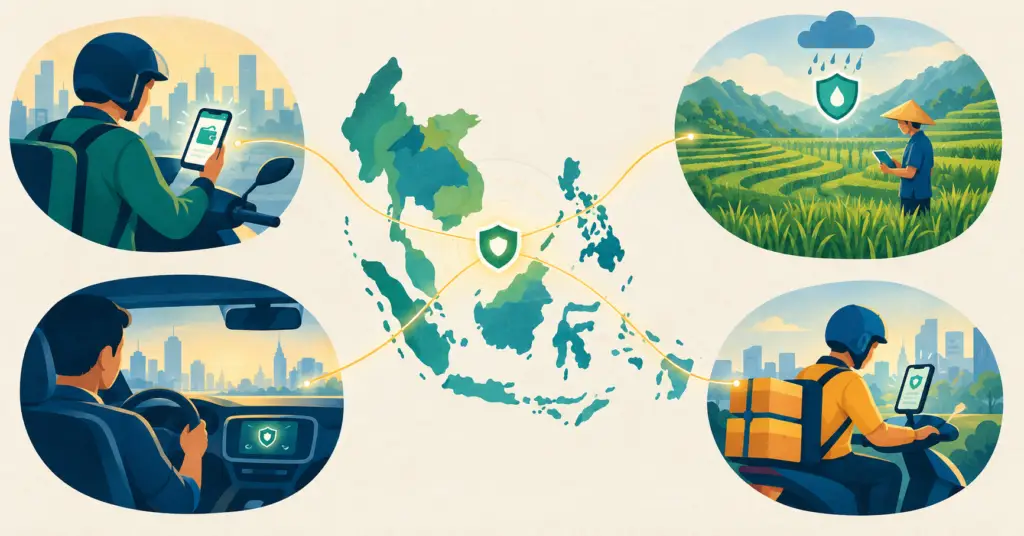
Southeast Asia’s insurtech boom threw off dozens of well-funded platforms between 2019 and 2022. A lot of them have gone quiet since. Some folded into bigger platforms. Others pivoted into pure software vendors. A few just stopped raising. The ones still standing weren’t the ones with the cleverest app. They were the ones that stopped treating insurance as a single good idea and started treating it as four ideas that have to hold together at once.
That’s really what an innovation breakthrough is, once you strip the buzzword off it. Not one clever feature. A product that keeps working in the market year after year because several ordinary strengths are reinforcing each other instead of standing alone. Four things in particular decide whether an insurance idea sticks or dies quietly: whether it answers a need people already feel, whether it’s riding a trend that isn’t going away, whether the business model is simple enough to explain in one sentence, and whether the operating engine underneath it, what gets offered, to whom, how it’s priced, and how it reaches the customer, is built well enough to survive contact with a real balance sheet.
Look at who’s actually thriving in the region right now on that basis. GCash’s GInsure in the Philippines. Grab’s newly licensed motor insurer in Singapore. PasarPolis powering Gojek’s insurance in Indonesia. Igloo running weather-index cover for rice farmers in the Mekong Delta. bolttech quietly wiring checkout-embedded insurance across 37 markets. None of them won on one breakthrough moment. They won by stacking all four factors, and this issue walks through each one in turn, using real numbers from the Philippines, Indonesia, Vietnam, and Singapore.
In this issue:
- Why Southeast Asia’s insurance protection gap, not a clever app, is the real starting point for insurtech innovation
- The three structural trends (climate risk, gig work, embedded finance) actually driving demand for digital insurance in the region
- Why GrabInsure and Igloo deliberately keep their business models boring instead of reinventing the product
- How GrabInsure, PasarPolis, and Igloo run offering, market, production, and delivery together to build real barriers to entry
- A four-pass exercise you can run on your own insurance or fintech idea
Start with the need, not the product
Every insurance pitch deck opens with a market-size slide. Almost none open with the actual gap. Here’s Southeast Asia’s: Asia accounted for roughly 30% of global economic catastrophe losses in 2025, but only about 5% of insured losses. Emerging Asia’s catastrophe insurance resilience score sits at just 5%. In the Philippines specifically, the catastrophe protection gap runs close to 98%, against a global average of 58%, while insurance penetration sits at 1.79% of GDP, below the Insurance Commission’s own 2% target. Indonesia and Vietnam are worse off by one measure: disaster-related insurance coverage in both countries remains below 1% of GDP.
That gap is why GInsure works, and the mechanics matter more than the headline. It isn’t one insurance product. It’s a marketplace layered into an app 14.6 million Filipinos already use for something else. It has issued more than 51.4 million policies across 48 products, and the pricing tells you exactly who it’s built for: scam protection for ₱30 covering 30 days, and free accident and health coverage bundled into ordinary mobile-load purchases, worth up to ₱30,000 in benefits including ₱500 a day in hospital income.
Nobody wakes up wanting to buy insurance. They wake up needing money back if a hospital bill lands, or if a scammer drains their e-wallet. GInsure sells the second thing, priced low enough that saying no takes more effort than saying yes. That’s the basic-need test, and it’s factor one. If a customer has to be talked into caring, you’re selling the wrong thing at the wrong moment.
A real need is necessary, but it isn’t enough on its own. Plenty of real needs sit around unaddressed for decades because nothing changes to make solving them urgent or cheap enough. That’s what the second factor supplies.
Ride a trend that’s actually structural: climate, gig work, and embedded insurance in Southeast Asia
Three trends are reshaping who needs coverage in this region and how they’ll pay for it, and none of them are hype cycles.
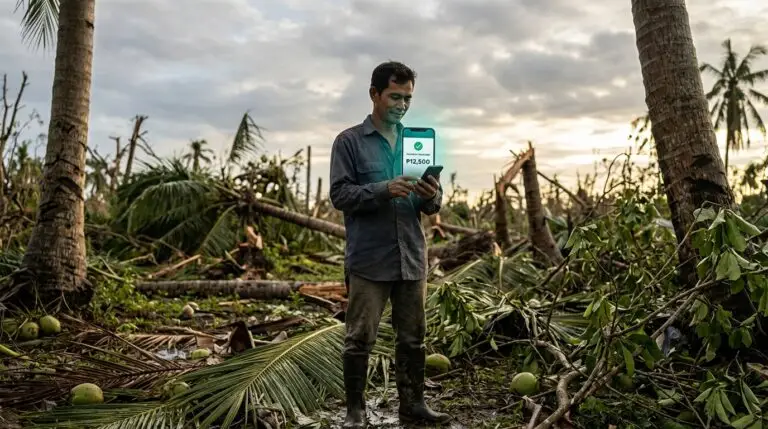
The first is climate, and the region feels it every year. When Super Typhoon Rai (Odette) hit the Philippines in December 2021, a World Bank-backed catastrophe bond triggered automatically on modeled wind speeds alone. It released a $52.5 million payout within weeks, and no adjuster inspected a single roof first. Four years later, in November 2025, the World Bank released $500 million to the Philippines after Typhoon Kalmaegi. Traditional indemnity insurance, which pays out only after a claims assessor confirms a specific loss, can’t move at that speed or that cost. That’s the case for parametric cover more broadly, and Igloo’s rollout in Vietnam shows what it looks like at farmer scale. It’s blockchain-based weather-index insurance for rice growers in the Mekong Delta, priced from $8 a hectare with a 0.1-hectare minimum, now running across eight provinces and covering more than 5,000 hectares toward a 50,000-hectare target. Rainfall data from Vietnam’s own meteorological agency triggers the payout automatically, backed by PVI Insurance as underwriter and SCOR as reinsurer. Igloo has since extended the same model to Vietnam’s coffee farmers. Nobody files a claim. The rain gauge does the filing.
The second trend is gig and platform-based work, which group insurance built for salaried staff was never designed to cover. In the Philippines, motorcycle-taxi platform Angkas now covers more than 20,000 riders through Igloo on a per-ride premium that switches on and off with each trip. In Singapore, Grab held 50.2% of the ride-hailing market in 2022 and saw an 18% year-on-year rise in active drivers in early 2025. It secured its own Monetary Authority of Singapore license in May 2025 to sell motor insurance directly to its driver-partners, priced against real mileage and trip data instead of a flat annual guess.
The third is embedded finance itself. Global embedded insurance was worth an estimated $145.2 billion in 2025, is on track for $188.5 billion in 2026, and is forecast to hit $1.24 trillion by 2033, a 30.8% compound annual growth rate. North America still holds the largest slice today, but Asia Pacific is the fastest-growing region in that forecast, which tracks with what’s actually happening on the ground from Manila to Jakarta.
None of these three trends is speculative. They’re driven by weather that keeps getting worse, labor markets that are already gig-shaped, and super-apps that already have hundreds of millions of users. A trend you have to explain to investors with a hypothetical isn’t one to build a company on. These three don’t need explaining to anyone who’s lived through a Manila typhoon season or opened Gojek this morning.
Need and trend explain why the market exists. They don’t explain why one company captures it profitably while three others burn through funding trying. That’s a business-model question, and it’s the third factor: keep the model simple enough that nobody has to be sold on how it works.
Keep the business model boring: lessons from GrabInsure and Igloo
The instinct in insurtech is to reinvent the product. The companies actually working in this region mostly reinvented the delivery of an old, well-understood idea instead.
GrabInsure’s core idea is not complicated. Price motor insurance on how someone actually drives and how much, not on a flat annual bracket. It sounds obvious in one sentence because it is. What makes it defensible is that Grab already has the trip data and the driver relationship. The announcement of its MAS license specifically flagged real-time access to mileage, trip frequency, and driving behavior, plus a cost structure that skips the commissions and branch networks a traditional insurer carries.
Igloo’s weather-index cover for Vietnamese rice and coffee farmers is the same logic applied to agriculture. Pay a small premium per hectare, get paid automatically when rainfall crosses a threshold, no loss adjuster required. The blockchain layer isn’t there for novelty. It’s there to cut the cost of issuing thousands of tiny policies cheaply enough that an $8-a-hectare premium can still be profitable.
Angkas and GInsure follow the same pattern from a different angle. Per-ride premiums and load-bundled micro-policies aren’t clever new insurance products. They’re an old idea, pay only for the moment you’re exposed, delivered through a channel that removes every point of friction between “I might need this” and “I already have it.”
Simple doesn’t mean unsophisticated. It means a rider, a farmer, or a GCash user can understand what they’re buying in about five seconds, with no broker walking them through it.
That’s the pitch a customer sees. It isn’t the whole business model. Behind every one of these “simple” products sits a fourth factor, an operating engine with four moving parts of its own, and this is where most insurtechs actually fall apart even after getting the need, the trend, and the pitch right.
Run all four levers of the business model at once: offering, market, production, delivery
A business model breaks down into what you offer, who you sell it to, how you actually underwrite and price it, and how it reaches the customer. Call them offering, market, production, and delivery. Plenty of companies nail one or two of these while quietly ignoring the rest, and it shows up fast in the loss ratio.
Take GrabInsure. The offering is usage-based motor insurance. The market is Grab’s own driver-partner base, which is growing 18% year-on-year and retaining 90% of drivers already. Production is real-time telematics feeding pricing that a standalone insurer couldn’t replicate without years of buying trip data it doesn’t own. Delivery is baked straight into driver onboarding inside an app drivers already open every shift, which is exactly why the model can skip commissions and branch costs entirely. Every piece reinforces the other three: cheap, accurate underwriting only matters if distribution is nearly free too.
Take PasarPolis in Indonesia. The offering keeps expanding along one thread inside Gojek’s ecosystem: SafeTrip for mobility users, GoSend and GoBox for package delivery, GoKilat for B2B2C delivery, instead of scattering into unrelated categories. The market is Gojek’s own base, which racks up hundreds of millions of trips a year. Production is the part doing the real work. PasarPolis’s platform can issue up to around 100 policies per second, running on a broker-underwriter structure (PT Pasarpolis Insurance Broker paired with Tap Insurance) built specifically to handle that volume without buckling. Delivery has run straight through the Gojek app since the partnership began in 2018, with claims processed inside the same flow riders already use to book a trip. Pull any one lever out, a fast claims engine sold through expensive agents, or cheap distribution attached to underwriting that can’t handle the volume, and the model stops compounding.
Take Igloo regionally. The offering has expanded from single embedded policies into what the company calls full-stack infrastructure. The market spans gig workers and micro-entrepreneurs in the Philippines to smallholder farmers in the Mekong Delta. Production varies by segment: telematics-adjacent per-ride pricing for Angkas, rainfall-triggered smart contracts for rice farmers, but always runs on data specific to the local risk instead of an imported template. Delivery runs through more than 40 platform partnerships in the Philippines alone, plus direct government-and-agency partnerships (VNMHA, PVI) in Vietnam, so the product shows up inside institutions people already trust rather than competing for attention as a standalone brand.
The real payoff: it wows the customer and locks out the competitor, at the same time
This is the part most “innovation framework” conversations skip, and it’s the whole point of making all four factors work together instead of picking a favorite. The same combination that makes a product feel effortless to the customer is what makes it nearly impossible for a competitor to copy.
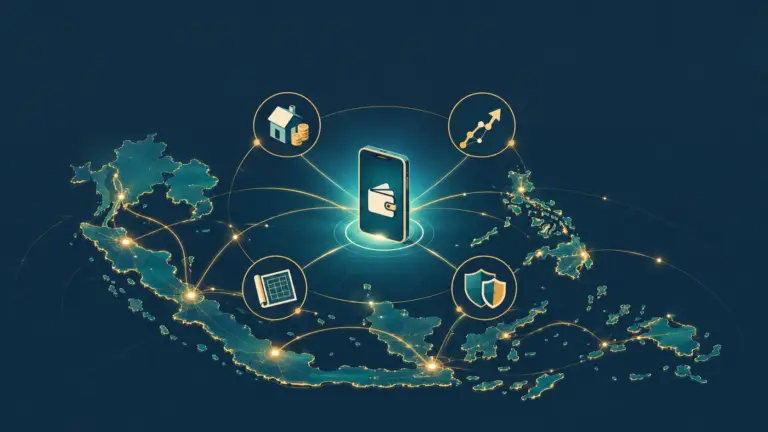
Start with the customer’s side of it. A rice farmer in the Mekong Delta gets paid the moment a rain gauge crosses a threshold, with no adjuster to argue with and no form to fill out. A Gojek rider gets covered and paid out inside the same five taps used to book the trip, because PasarPolis can issue up to around 100 policies a second without the app ever feeling slower. A Grab driver gets a fairer premium the moment they sign up, because the pricing already knows how they actually drive. None of that reads as an insurance feature. It reads as the product just working, and that’s the wow the diagram is pointing at: insurance disappearing into an experience the customer already trusts.
Now flip to the competitor’s side, because the exact same setup that creates that feeling is what keeps a rival out. Grab’s driver telematics isn’t just a pricing input. A competitor can’t buy Grab’s trip history, and 90% driver retention means there’s no obvious opening to poach the customer base a new insurer would need. Igloo’s 40-plus Philippine platform partnerships and its direct line into Vietnam’s meteorological agency aren’t just distribution either. Many carry exclusivity, so a rival can’t simply ask GCash or VNMHA for the same slot. PasarPolis’s seven years inside Gojek and its ability to handle that policy volume is trust and infrastructure a new entrant would need years to rebuild from zero. And bolttech, the Singapore-founded embedded-insurance platform now valued at $2.1 billion after a $147 million raise, has spent since 2020 building relationships with “hundreds of insurers and partners” across 37 markets. That kind of network effect gets harder to dislodge with every new checkout it plugs into.
None of these barriers came from a single breakthrough moment, and none of the wow came from a single feature either. Both came from compounding the same four ordinary advantages against each other, deal by deal, until the experience felt seamless on one side and the gap felt unclosable on the other.
What to actually check before you back or build the next Southeast Asia insurtech
If you’re evaluating an insurtech pitch, a new product at your own company, or a super-app thinking about bolting on coverage, run it through the same four questions this issue has been walking through, instead of the usual TAM slide.
Does it solve a need someone already feels, or does it need a slide to explain why they should feel it. Is it riding a trend that’s already locked in (climate, gig work, embedded distribution), or one that depends on behavior changing first. Can a customer understand what they’re buying in five seconds, without a broker. And does the pitch actually address all four business-model levers, offering, market, production, delivery, or does it hand-wave past the two that are hardest, usually production (underwriting economics) and delivery (distribution cost).
Most decks pass the first two tests easily, because need and trend are the fun parts to talk about. The ones that survive contact with a P&L are the ones that also show their work on the boring half: how it’s priced, and how it reaches the customer at a cost that doesn’t eat the margin. That’s not a flashy answer, but it’s the one the numbers back up, from Manila to the Mekong Delta.
Try it yourself: stress-test your idea in four passes
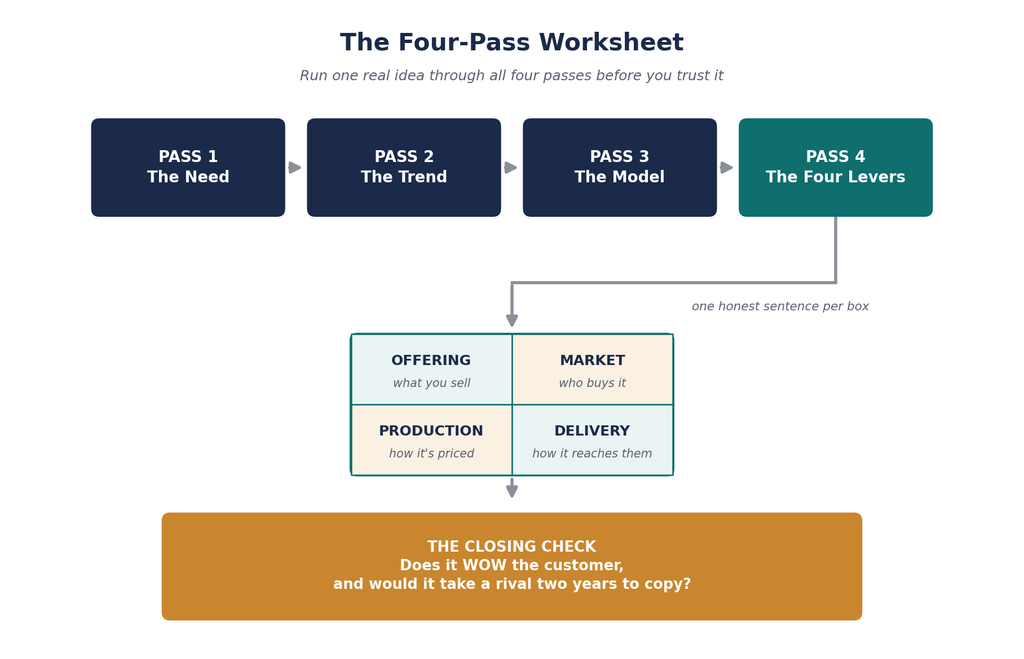
Reading four case studies is useful. Running your own idea through the same four checks is what actually changes how you build it. Grab a real idea you’re sitting on, a product, a feature, a side venture, even a pitch someone sent you, and give it twenty minutes across four passes. Write down actual answers, not impressions. That’s what makes this different from just nodding along to Grab and PasarPolis.
Pass one, the need. Write the exact moment someone reaches for what you’re building, in one sentence, the way GInsure’s team clearly could: “a user just got scammed and wants ₱30 worth of peace of mind for the next month.” If your sentence describes a category (“people need better financial protection”) instead of a moment, you haven’t found the need yet. Keep rewriting until it’s specific enough that you could picture the person and what just happened to them.
Pass two, the trend. Name one trend that’s already locked in, not one you’re hoping happens. Climate risk, gig work, embedded distribution, and rising smartphone penetration all did that job for the companies in this issue. Ask yourself: is there a number I could point to that proves this is already underway, the way the $52.5 million cat bond payout proves climate risk is already being priced into Philippine finance? If you can’t cite one, you’re betting on a hope, not a trend.
Pass three, the one-sentence model. Write the pitch the way GrabInsure’s is: “price motor insurance on how someone actually drives.” One sentence, no jargon, something a stranger could repeat back correctly after hearing it once. If it takes a paragraph, or requires you to explain three new concepts first, simplify it before you do anything else. Complexity you can’t explain in one sentence is complexity you probably can’t operate profitably either.
Pass four, the four levers. Sketch a small grid with four boxes: offering, market, production, delivery, the same shape as the business-model quadrant this whole framework is built on. Fill in one honest sentence per box. What exactly are you offering. Who exactly buys it, specifically enough to name the app or channel they’re already using. How will you actually price and underwrite it cheaper or better than an incumbent, the way Grab’s trip data does. And how does it reach the customer without a costly sales force standing in between, the way PasarPolis rides inside Gojek’s checkout. If any box is vague, that’s the box that will sink the idea first, usually production or delivery, since those are the two everyone skips past to get to the fun parts.
When all four boxes are filled in with specifics instead of hopes, ask the closing question this issue keeps coming back to: what about this combination would make a customer feel like it just works, and what about it would take a well-funded competitor at least two years to copy. If you can answer both, you’re not looking at a feature anymore. You’re looking at the early shape of an innovation breakthrough, the kind that sustains itself in the market because it never depended on just one good idea in the first place.
References:
- Artemis.bm. (2022, January 24). Philippines cat bond triggers on typhoon Rai (Odette) winds, $52.5m payout due.
- Finovate. (2025, June). Insuretech company bolttech raises $147 million at a $2.1 billion valuation.
- Fintech News Singapore. (2025, June 12). Grab’s motor insurance play could rewrite the rules in Singapore.
- Grand View Research. (2026). Embedded insurance market size, share & trends analysis report, 2033.
- Igloo. (2022, November 1). Igloo launches the first blockchain-based weather index insurance for rice farmers in Vietnam, in partnership with PVI Insurance, VNMHA and SCOR [Press release].
- Insurance Business Magazine. (2026, July 24). Asia-Pacific’s catastrophe season was subdued, its protection gap was not.
- PR Newswire. (2025, June 27). Ph fintech GCash unlocks insurance for 14 million Filipinos. Yahoo Finance. TechNode Global. (2026, April 15). Insurtech Igloo expands Philippines strategy as insurance market hits $8.4B.
- The Digital Banker. (2024, October 14). PasarPolis and Gojek announce strategic partnership to expand insurance access for millions in Indonesia.
- World Bank. (2025, November 28). World Bank releases US$500 million to assist Philippines after Typhoon Kalmaegi (Tino) [Press release].







Thank you IdeyaHub for this article!