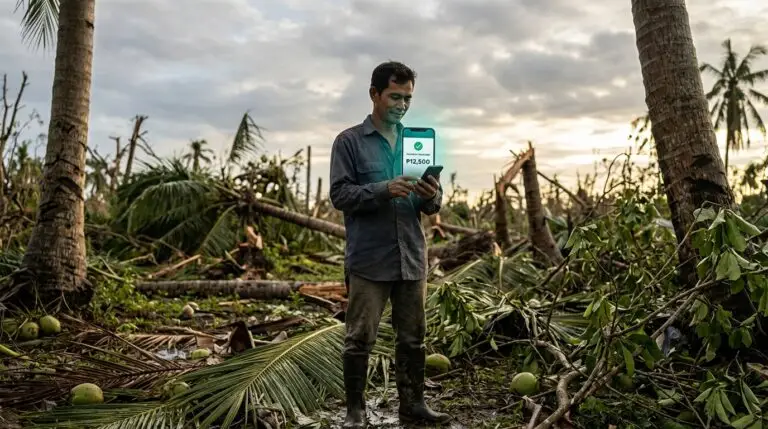
Almost every digital bank in Southeast Asia that’s now profitable, or close to it, started as one narrow observation about one specific customer. None of them scaled on that observation alone. Here’s the three-stage path from a fragment to a bank that works, and where the rest of the pack keeps getting stuck.
| The takeaway, up front. Southeast Asia’s profitable niche banks all cleared the same three gates, in order. Miss one and the idea stalls, however good it looked at the start. 1. A precisely named customer. Not “Filipinos need credit” — RCBC named the one to two million SSS members with no fast access to credit. Not “the unbanked” — Tonik named payroll employees and checkout shoppers specifically. 2. A trade neither side could make alone. GXS traded its banking license for Grab and Singtel’s transaction data. Trust traded distribution reach for FairPrice’s weekly foot traffic. Pull out either half and the product breaks. 3. Years of capital and compliance behind it. Trust took 3.5 years after launch to turn its trade into a profitable bank. GXBank and GXS are still spending their way toward the same finish line in 2026. That’s the whole argument. Everything below walks through how each bank actually got from gate one to gate three, and where the rest of the region’s digital banks are still stuck. |
Here’s how that actually played out, bank by bank. Somewhere inside Grab and Singtel’s joint venture, a few years back, someone noticed something small. Gig drivers and food-delivery riders in Singapore were sitting on years of ride data, income data, tenure data, the kind of thing a bank would kill for. And almost none of them had a traditional credit bureau file a bank could underwrite against. That’s it. That’s the whole idea. Not “let’s build a digital bank.” Not “let’s disrupt lending.” Just: this specific group of people has data nobody’s using and no product that uses it.
That observation is worth almost nothing by itself. A single person’s hunch about gig workers and transaction data doesn’t move a peso, a ringgit, or a rupiah. What turned it into GXS Bank’s FlexiLoan, a personal loan where the borrower sets the amount from as little as S$200, the tenure, and the repayment date, underwritten by a proprietary “ecosystem risk score” built from Grab and Singtel data, wasn’t the original idea. It was everything that happened to that idea after someone else got involved, and then a whole team got involved.
This is the pattern worth understanding if you’re trying to build, invest in, or simply make sense of niche digital banking in Southeast Asia right now. It isn’t really about technology, and it isn’t really about licenses, even though both matter. It’s about how far an idea has to travel before it becomes a bank a customer can actually use. Most ideas never make that trip. The ones that do all pass through the same three stops: a fragment held by one person, a concept shaped by a small group who buy into it, and a robust product only a full team with capital, compliance, and infrastructure behind it can ship.
In This Issue
- Why “gig workers have no credit file” is an idea fragment, and why GXS Bank’s actual FlexiLoan product only exists because of what happened to that fragment next
- How Trust Bank in Singapore turned a distribution partnership with a supermarket chain into Singapore’s first profitable digital bank, three years after launch
- Why Bank Jago and GXBank both took the identical fragment (an underserved segment sitting inside a bigger app) and built almost opposite robust concepts
- What Superbank’s ownership consolidation under Grab tells you about the exact point where a “concept” needs a team, not a partnership, to become real
- Inside Tonik and RCBC’s Philippine playbook: two banks that started from fragments about the same borrower and shipped completely different robust products
- What to watch through the rest of 2026 as GXS, GXBank, and Superbank all chase the same finish line: breakeven
The Framework at a Glance
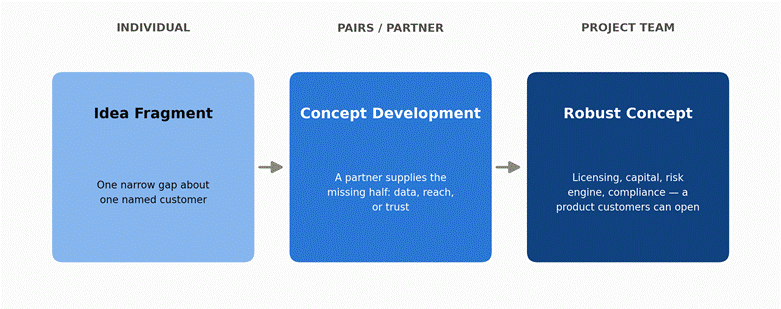
Figure 1. The path every winning niche bank in this issue actually followed — not a brainstorm, a trade, then a build.
Every bank in this issue can be placed somewhere on that line. The interesting ones already made it to the far right. The ones still stuck in the middle are worth watching for a different reason: they show you exactly what’s missing.
Stage one: the idea fragment is never a business plan
An idea fragment, in the way product and strategy teams actually use the term, is a half-formed insight. It names a real gap, but it doesn’t yet explain how to close it, who pays for it, or what stops a bigger bank from doing it better next quarter. Southeast Asia’s digital banking sector is full of these fragments, because the underlying gap is enormous: roughly half of the region’s adults are unbanked, and another quarter are underbanked, according to Bain’s most recent read on the market. That’s not a niche. That’s most of the population. Which means the fragment itself, “there’s an underserved segment here,” is nowhere near specific enough to build anything on. Every bank in Southeast Asia could say that sentence. Almost none of them have.
What separates a usable fragment from a slogan is precision about the person. RCBC’s fragment wasn’t “Filipinos need credit.” It was narrower: one to two million members of the Social Security System, mostly Gen Z and Gen X, who hold formal jobs, pay into SSS every month, and still can’t get a bank to move fast for them. Tonik’s fragment was narrower still in a different direction: the roughly 90% of Filipinos without meaningful access to formal credit, approached not as a mass of unbanked people but as two specific channels, salaried employees whose employers already run payroll, and shoppers standing at a merchant’s checkout counter. Bank Jago’s fragment came from a University of Indonesia study Jago commissioned with GoPay: one in five GoPay users had no active bank account at all, despite living an entirely digital financial life through ride-hailing and e-commerce apps every day.
None of these fragments required new technology to notice. Anyone with access to SSS enrollment data, GoPay’s user base, or Grab’s driver-tenure records could have spotted the same gap. What made the difference is that someone inside RCBC, Jago, and Grab actually looked, named the segment precisely enough to act on, and then didn’t try to build the whole solution alone.
That last part matters more than it sounds. The failure mode at this stage isn’t a bad idea. It’s an idea that stays a fragment because one team, or one product manager, tries to carry it the rest of the way solo. A fragment needs a second party who owns something the first party doesn’t: data, distribution, trust, or capital. Without that, most fragments quietly die inside a strategy deck.
Stage two: concept development is a trade, not a brainstorm
This is where the “pairs” stage in the framework earns its place, and it’s worth being precise about what actually happens here, because it isn’t a brainstorming session. It’s a trade. One side has the fragment. The other side has the one ingredient the fragment can’t work without. Neither side can finish the concept alone.
GXS Bank’s trade is the cleanest version of this in the region. The bank had the fragment: gig workers lack credit files. Grab and Singtel had the other half: years of ride, delivery, and mobile-usage data on exactly those customers. With customer consent, GXS layered that data into a proprietary risk score sitting on top of conventional bureau scoring, which is the only reason FlexiLoan can approve someone a traditional bank would decline on paper alone. Neither party could have built this without the other. GXS without Grab’s data is a bank with a good hunch and no way to underwrite it. Grab without GXS is a ride-hailing app with a lending idea and no banking license.
Trust Bank in Singapore ran the identical trade through a different door: distribution instead of underwriting data. Standard Chartered had the banking license, the balance sheet, and the regulatory relationships. FairPrice Group, the operator of Singapore’s largest supermarket chain under the NTUC cooperative, had something a bank almost never gets organically: a reason for millions of ordinary Singaporean households to walk past a Trust Bank sign-up point every single week while doing something they were already going to do anyway, buying groceries. That trade produced a bank where 70% of new customers now arrive through referrals rather than paid acquisition, because the FairPrice relationship gave Trust a trust deficit no marketing budget closes as cheaply.
RCBC’s version of the same trade shows up in its SSS Loan Lite product. RCBC had the banking license and the DiskarTech app. It didn’t have, and couldn’t build on its own, a government-verified record of who holds a formal job and how consistently they’ve paid into it. The Social Security System had exactly that. The trade wired SSS contribution history directly into RCBC’s lending decision, alongside a face scan for verification, and turned a loan approval that would normally take a payslip, a branch visit, and a loan officer’s judgment call into something that clears in minutes.
Notice what all three trades have in common: neither party is doing the other a favor. GXS needs Grab’s data as much as Grab needs a banking license to lend against it. FairPrice gets a modern financial product to offer its shoppers; Standard Chartered gets a distribution network it could never build from scratch. RCBC gets underwriting data; SSS members get money faster than a payslip-based system could ever deliver it. A concept that survives this stage isn’t a partnership announcement. It’s a trade where withdrawing either side breaks the product completely, which is exactly why a rival can’t copy it by signing a similar-sounding deal with a different partner. The data, the distribution, and the trust behind each of these trades took years to build and can’t be rented for a quarter.
This is also where most niche banking ideas in the region actually die, not at the fragment stage, where the idea is cheap, but here, where it requires two organizations to agree on a trade specific enough to be worth defending. A bank that can only describe its “partnership ecosystem” in general terms, an API here, an MOU there, hasn’t found its trade yet. It’s still collecting logos.
Stage three: a robust concept needs a team, not a partnership
A working trade between two parties still isn’t a bank a customer can open. This is the gap almost everyone underestimates, and it’s the reason “concept development” and “robust concept” are two different stages in this framework, not one. Turning FlexiLoan, Trust’s FairPrice pipeline, or SSS Loan Lite into a product that survives a regulator’s scrutiny, a bad debt cycle, and millions of transactions requires an entirely different scale of effort: compliance teams, capital reserves, a licensed underwriting engine, fraud controls, a customer service operation, and the unglamorous plumbing that turns a clever idea into something that still works at 2 a.m. on a Sunday when a payment fails.
Trust Bank’s own numbers show exactly how long this stage takes even when the trade is strong. Trust launched in September 2022. It didn’t reach profitability until March 2026, roughly three and a half years later, becoming Singapore’s first digital bank to get there. The FairPrice trade got Trust its first customers cheaply. Everything after that, the three and a half years of building lending, insurance, and investment infrastructure on top of that initial account base, is what a full team looks like when it’s actually assembling a robust concept rather than shipping a single clever feature.
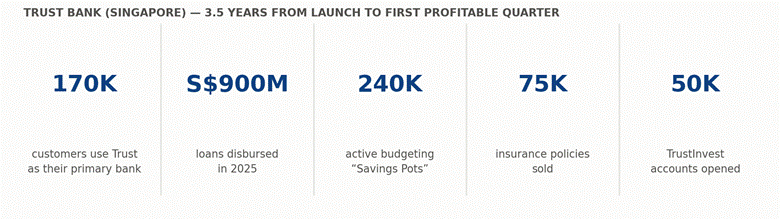
Figure 2. None of this existed at Trust Bank’s launch. It’s what “building the team” actually produced over three and a half years.
GXBank in Malaysia shows the same climb from a different angle. It launched in November 2023, and the chart below shows what the first eight months of that climb looked like.
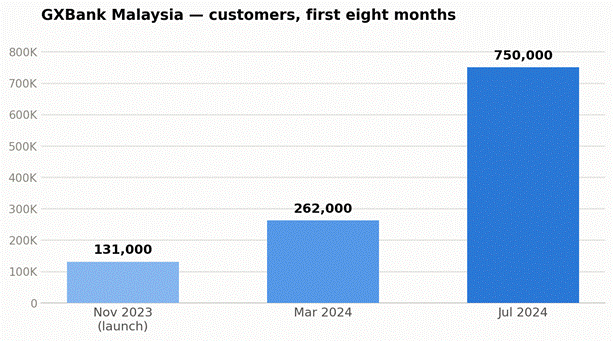
Figure 3. A robust concept doesn’t arrive at launch — it’s built, month by month, after the trade is already in place.
Beyond that first-year curve, more than 13 million debit card and QR transactions followed. The parent group, the same Grab-Singtel-Kuok Brothers consortium behind GXS in Singapore, is targeting breakeven in 2026 across both entities, backed by roughly S$1.9 billion in combined capital, and needs an estimated S$1.5 billion in deposits and S$2 billion in loans to get there. That capital requirement is the tell. A fragment costs nothing to have. A trade costs a negotiation. A robust concept costs billions of ringgit in deposits and loans before it breaks even, because a licensed bank has to hold real capital against real risk, not just ship a feature and see what happens.
Superbank in Indonesia is the clearest recent example of what happens when a concept outgrows a partnership structure and needs to become a team under one roof. Superbank started as a joint venture combining Grab, Singtel, and Emtek’s banking assets, with SeaBank and other players in a crowded Indonesian digital banking field. In 2026, Grab moved to consolidate Superbank, taking majority ownership and folding in OVO, another payments asset in its orbit, while Superbank posted a pre-tax profit of roughly Rp142 billion through April of that year and pushed toward full-year profitability. That consolidation is the concept-to-team transition happening in public. A joint venture is still, structurally, a trade between separate parties who each keep their own priorities. Full ownership is what lets one team make the fast, unglamorous decisions, pricing, risk appetite, which products to kill, that a robust concept needs and a multi-party partnership structure tends to slow down.
Bank Jago’s path ran through the same transition earlier and more quietly. The GoPay integration, letting a verified GoPay user open a fee-free Jago account with zero-charge transfers between the two, was the concept-development trade. Turning that into a robust concept meant building an actual banking operation behind it: national banking penetration in Indonesia sits at roughly 61.7%, and Jago’s job was proving it could serve the fifth of GoPay’s user base sitting outside that number, not just as a marketing integration but as licensed accounts with real deposits, real risk controls, and a lending book behind them.
Same fragment, two different robust concepts
Here’s the part that should change how you read any “we found an underserved segment” pitch. Tonik and RCBC in the Philippines started from almost the same fragment, Filipinos with steady income but no fast access to formal credit, and built completely different robust concepts because they made different trades at stage two.
Tonik didn’t attach itself to a super-app’s transaction data the way GXS did with Grab, or to a government database the way RCBC did with SSS. It built two lending channels from the ground up: salary-deduction loans distributed through employers, and merchant installment financing distributed at checkout. Both channels ran against Tonik’s own underwriting engine rather than a partner’s data feed. That choice, building the trade internally instead of importing it from a partner, produced a slower start but a more defensible robust concept: an 82% loan-to-deposit ratio, the highest of any Philippine digital bank, a loan book that grew 2.3 times year-on-year to $110 million by early 2026, and a 51% net interest margin. Tonik became the first standalone digital bank in the Philippines to post a genuinely profitable quarter, not because its fragment was better than anyone else’s, but because it controlled every stage of the journey from fragment to robust concept itself, rather than depending on a partner’s willingness to keep sharing data.
RCBC’s SSS Loan Lite, by contrast, depends entirely on a government agency’s data staying reliable and accessible. That’s a real structural risk sitting underneath an otherwise elegant product: a breach or policy change at SSS becomes RCBC’s problem too, in a way it never would if RCBC had built its own underwriting engine the way Tonik did. Neither approach is wrong. They’re different bets on where the fragile point in the chain sits, inside your own team, where you control it but have to build it slower, or inside a partner, where you move faster but inherit someone else’s risk.
Figure 4. Four markets, four idea fragments, four robust concepts
| Market | The idea fragment | The stage-two trade | The robust concept |
| Singapore | Gig workers have transaction history but no credit file | Grab and Singtel’s ecosystem data, for GXS’s banking license | FlexiLoan’s ecosystem risk score, plus Trust’s FairPrice-driven, referral-led full suite |
| Malaysia | An underserved segment sitting inside a bigger regional playbook, not yet proven locally | The same Grab-Singtel-Kuok consortium re-running its Singapore trade one border over | GXBank’s 750,000-customer base, chasing 2026 breakeven on S$1.9 billion in capital |
| Indonesia | One in five GoPay users has no bank account behind their e-wallet | GoPay’s user base and data, for Jago’s license; later, Grab’s majority stake in Superbank | Jago’s in-app account opening; Superbank’s consolidation after its 2026 profit turn |
| Philippines | Steady-income Filipinos still locked out of fast formal credit | Employer payroll and merchant checkout channels (Tonik); SSS contribution records (RCBC) | Tonik’s 82% loan-to-deposit ratio and first profitable quarter; RCBC’s minutes-not-days SSS Loan Lite |
Where fragments go to die
It’s worth naming the failure pattern directly, because it’s more common than any of the success stories above. A fragment dies at stage one when nobody with the authority to act on it also has the specificity to name a real customer, “millennials want better banking” instead of “one in five GoPay users has no bank account.” It dies at stage two when a bank collects partnerships instead of trades, announcing an API integration or an MOU that never gets wired into anything else the bank already has. RCBC’s own gold-tokenization talks with the Philippine Digital Asset Exchange sit at exactly this point as of this writing: a real fragment, a real potential partner, no pricing, no minimums, no launch date yet. Whether that becomes a robust concept or stays a headline is genuinely still open.
And a concept dies at stage three, the expensive stage, when a bank has a working trade but never gets the capital, licensing patience, or organizational commitment to build the compliance and risk infrastructure underneath it. This is the quiet reason Southeast Asia’s digital banking sector has a handful of clear winners and a much longer list of banks still burning capital three or four years after launch. The trade was fine. The team behind it either ran out of capital, ran out of regulatory patience, or ran out of time before a better-funded rival’s version of the same idea reached its own robust concept first.
What to watch through the rest of 2026
Four things worth tracking if you’re following this space. Watch whether GXS and GXBank hit their combined 2026 breakeven target on S$1.9 billion in capital, since that’s the clearest public test anywhere in the region of exactly how much a robust concept costs once you can see the finish line. Watch whether Superbank’s consolidation under Grab’s majority ownership, with OVO folded in, produces faster product decisions than the joint-venture structure it replaced, or whether combining two large partners’ priorities under one roof turns out to be its own kind of slow. Watch whether RCBC’s gold-tokenization talks with PDAX ever leave the MOU stage and become a priced, launched product, the clearest live test case in the region of a fragment stuck between stage two and stage three. And watch whether any other Philippine or Indonesian bank tries to copy Tonik’s build-it-yourself underwriting approach rather than renting a partner’s data the way GXS and RCBC did, since that’s a genuinely different bet on where you want your fragile point to sit.
None of this shows up as a single headline. It shows up as a Singaporean supermarket shopper signing up for a bank account between the produce aisle and the checkout line, a Filipino SSS member getting cash in minutes instead of days, a Grab driver in Kuala Lumpur or Jakarta getting approved for a loan a conventional bank would have declined on paper alone. Every one of those moments is the tail end of a journey that started as one person’s narrow observation about one specific customer, and only became real because it found exactly the right partner, and then exactly the right team, to carry it the rest of the way.
Workshop: where is your idea actually stuck?
Next time you, your team, or a bank you’re evaluating describes something as an innovation, place it on the three-stage line before you believe the pitch.
| # | Stage | Ask yourself |
| 1 | The fragment. | Can you name the customer this serves in one sentence, specific enough that a competitor can’t serve them by copying a feature list? “Underbanked Filipinos” doesn’t count. “SSS members with no prior access to fast credit” does. |
| 2 | The trade. | What does your one essential partner supply that you genuinely cannot build yourself, data, distribution, or trust? And what do you supply them that they can’t get anywhere else? If you can’t answer both halves, you don’t have a trade yet, you have a meeting. |
| 3 | The team. | What would it cost, in capital, licensing time, and headcount, to turn this trade into something a regulator, a fraud cycle, and a million transactions can’t break? If you haven’t priced that yet, you don’t have a robust concept. You have a concept. |
If you can only answer question one, you have a slogan. If you can answer one and two but not three, you have exactly what most of the region’s still-unprofitable digital banks have: a real trade nobody has finished paying for. The banks in this issue that made it all the way to the third answer, GXS, Trust, Tonik, are the ones actually worth studying.
Hit reply with your three answers. A future issue will feature one submission, anonymized on request, with a real breakdown of which stage it’s actually stuck on.
Tags: Southeast Asia Digital Banking, Niche Banking, GXS Bank, Trust Bank Singapore, GXBank, Bank Jago, Superbank, Tonik Bank, RCBC, Fintech Innovation, Product Development
References
- GXS FlexiLoan: Lending Reimagined for the Underserved, Grab
- Fulfilling Southeast Asia’s Digital Financial Services Promise, Bain & Company
- How Trust Bank Became Singapore’s First Digital Bank to Reach Profitability, Fintech News Singapore
- Singapore Digital Bank Trust Bank Reports First-Ever Profit in 2026 March, Caproasia
- Feature: GXS Bank rolls out new products, aiming to break even in 2026, The Edge Malaysia
- GXBank to focus on deepening existing capabilities, TNGlobal
- GXBank Leads Malaysia’s Digital Banking Sector With Highest Deposits and Assets, RinggitPlus
- Grab To Consolidate Superbank, Deepening Financial Services Commitment in Indonesia, Grab Holdings Investor Relations
- Superbank Catat Laba Sebelum Pajak Rp 142 Miliar hingga April 2026, Superbank
- GoPay and Bank Jago Bring Together Indonesia’s First Digital Bank and On-Demand Platform Integration, Bank Jago
- Tonik Becomes the First Standalone Digital Bank in the Philippines to Achieve Profitability, Yahoo Finance Singapore
- SSS Members Can Now Get Instant Emergency Cash Up to ₱20,000 via RCBC DiskarTech, BitPinas
- RCBC, PDAX Partner to Explore Tokenized Gold Access in PH, SunStar Davao